
Facebook lead ads getting leads but no sales? 5 fixes
 Written by Benjamin Boman · · 8 min read
A lot of small businesses waste money on lead gen ads. It’s usually not the account setup or the ads themselves. It’s the strategy and thinking behind the advertising.
These are the five fixes I go through in the video:
- Prioritising cheap leads over quality leads
- Being unprepared for manual follow up
- Following up on a single channel
- Testing for one month
- Ignoring offer reality
Transcript
A lot of small businesses are just wasting money on their lead gen ads. It’s not because the account setup or the ads themselves are bad. It’s often just about the strategy, or the thought that goes behind the advertising effort itself. So today I’m going to go through five quick fixes you can use to reverse that waste of 95%.
1. Prioritising cheap over quality leads
So the first thing: prioritising cheap over quality leads. This is a really tempting thing that I see a lot of people get into. They want as many leads as possible.
Problem is, whatever you ask Meta for, generally you get more of that. So if you get a lot of cheap, crappy leads, you get more crappier and cheaper versions of those.
Whereas if you change it to focusing on higher quality leads, you’re going to get more of those over time, and hopefully cheaper and cheaper as you improve your ads and Meta gets more data. That can mean they’re slightly more qualified on the front end, or they’ve gone through more friction to show their motivation and interest in your service.
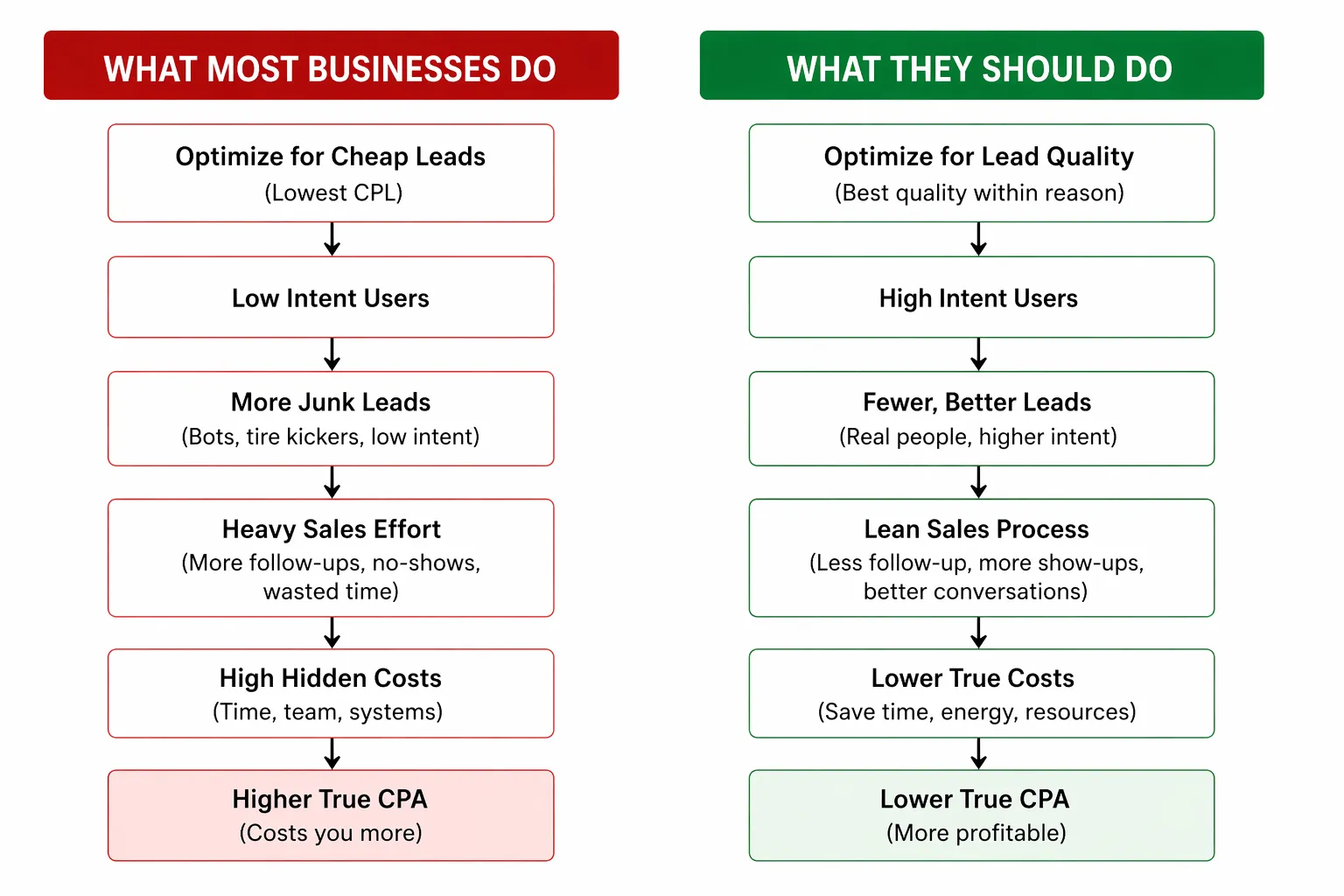
What most people do when they optimise for the lowest cost leads is they end up getting more junk. They have to expand their sales teams and end up running like a call centre to process all the leads. It’s just a waste of time for everybody.
Instead, focus on optimising for lead quality:
- Put qualifiers in your forms and landing pages
- Try to screen as much as you can for high intent buyers, even if it costs you two or three times more
You’ll get cheaper leads over time as the system optimises itself, and you won’t end up building a massive call centre to process all those leads.
2. Being unprepared for manual follow up
Number two is being unprepared for manual follow up.
There seems to be an idea I see a lot out there: if you put the right ad in front of the right people, they’re just going to click your ad, sign up and buy the thing without talking to a human being. For ecom, yeah, sure.
But lead generation is completely different. Most of the time you’re selling a service that’s quite expensive for a lot of people. So you need to call and talk to those people on the phone to close them into a sale. Those people will not sign up by themselves, and if they do, it’s an extremely small percentage.
So you need to flip the idea to “I’m generating leads where I have a conversation, and I convert people on the conversation”.

You can see here as an example:
- The pink is the percentage of people who might go through the full transaction without any human intervention
- The blue is the people who fill out a lead form and self-book into a conversation with you
- The purple is the people you could connect to if you actually picked up the phone and talked to them
So you need to change the paradigm of how you see lead generation. Advertising is not magic. Instead:
- Prepare the sales team to be notified and work the leads as soon as possible, by phone, SMS, getting back to these people as fast and as much as you can
- Prepare your scripts ahead of time, so your sales team knows what to say for getting people booked on your calendar, and for closing them in person or on a sales call
- Prepare your expectations. Everyone who fills out your lead form needs to be worked. It’s not waiting around for that small segment of people who will buy with no intervention
- Track your numbers ruthlessly: how many leads are coming in, how much they cost, how many you’re connecting with on the phone, SMS and so on, how many convert into bookings, and how many of those actually convert into sales on the back end
3. Single channel follow up
Next, single channel follow up.
What I see a lot of the time is businesses rely on only one channel to nurture leads once they come in. Somebody fills out a form on Facebook or a landing page, and then an email sequence goes out to that person over 7 days, for example. It’s not enough in 2026.
In fact, if anything, most people ignore email. You’ve probably noticed the behaviour yourself. You’ll text with friends, family and so on, but if it’s something you need to look up or reference later, then you might send an email. You’re generally not going to your email first to have a conversation or continue one. So email is almost like a reference vault more than anything else these days, in my opinion.
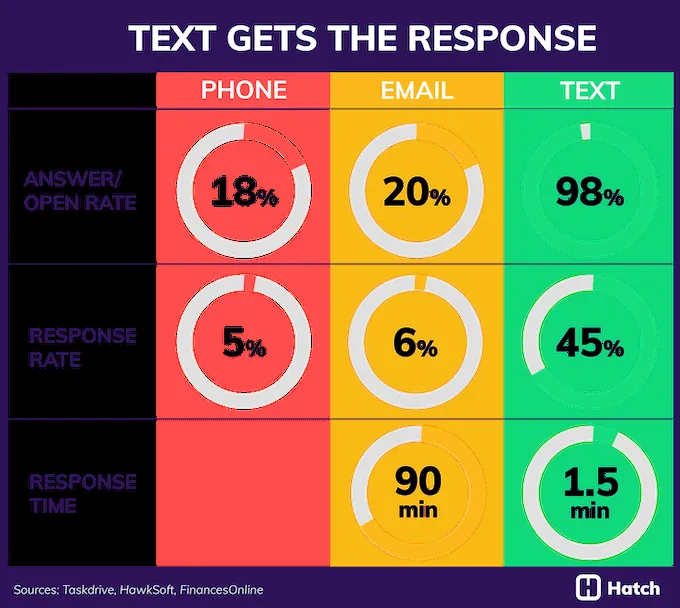
You can see from this chart (it comes from Hatch) that the number of people who answer a phone call, email or text message varies a lot. You want to hit as many of those channels as you can to follow up the leads.
Instead:
- Think about it as if you’re trying to get your money back from the lead. If you’re paying $5, $10, $15 or $25 for a lead, this is how you get your return, by using multiple avenues to get in touch and have that conversation as best you can
- Work multiple channels, not just email or SMS. The phone is still crucial
- Think about other platforms like WhatsApp and iMessage as well, because the response rates can be different
4. Testing for one month
Okay, number four: testing for one month. I notice a lot of new clients want to do a one month test of advertising.
Even with proven techniques and funnels (meaning the sequence of pages or messages a person sees once they interact with your advertising), there’s always, always, always something that needs adjusting for your particular business. And these small things can make a huge difference to the performance of the ads.
So it’s rarely plug and play, working from the first week. It takes time, and not just on the ad side. It takes time on the organisation side as well. For example, if your company isn’t used to dealing with completely cold leads (people who’ve never seen or talked to you before, and don’t trust you any more than anybody else on the internet), that can be a bit of a process for your sales team to get used to. They need to learn how aggressively to follow up those leads. Not aggressive as in “Hey idiot, respond to my message”, but persistent: contacting more, following up and being patient.
What I see is people quit after 1.5 months, and it’s just way too soon. You’re probably only starting to make progress in your second month, getting a feel for what’s going on. If you quit at 1.5 months, you’re literally ensuring you lose all the money you spent, both on your Meta ads manager and the ads themselves.
I know it sounds like a hack to say it’s a bit of an investment, but it really is. You’re trying to build an asset for the company. It’s unreasonable to think that can be done in 1 or 2 months. It needs that 1 to 3 month process to be set up, run through the system, and have the numbers gathered and improved.
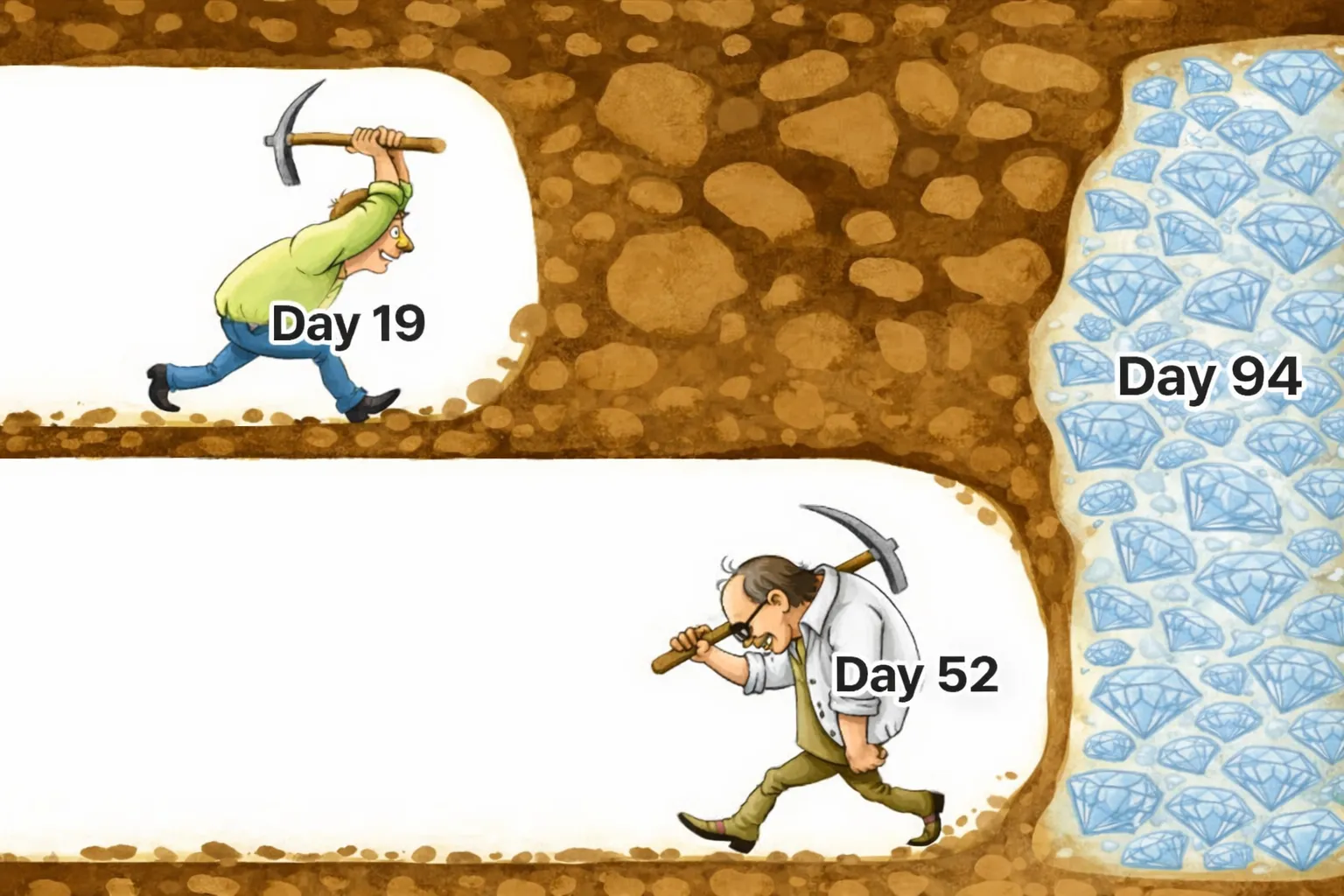
I think everybody’s seen this meme of the guy chipping away at the rocks, almost hitting the diamonds and giving up. To some degree, it is like that. A lot of people give up way too early, and some give up just before things start working out.
There’s no one right setup that will work for every business every time. There are right setups that work for individual businesses, and it’s the job of you and your ad manager to work out the specific combination for your business.
So instead:
- Budget for at least 3 months
- Troubleshoot each month based on the performance numbers
5. Ignoring offer reality
Number five: ignoring offer reality.
Firstly, what is an offer? An offer is a packaged idea used to entice people into engaging with your business. A really famous example is the free taster of different food in a supermarket. For a school, it might be a free career counselling consultation, or a free set of tools if you sign up. That type of thing.
Advertising is part of marketing, obviously. That means it’s about understanding what people want, giving that to them, and enticing people into your solution as the preferred supplier of that thing. We generally can’t create demand out of nowhere with advertising. That’s really expensive, and typically done by massive companies, not everyday companies.
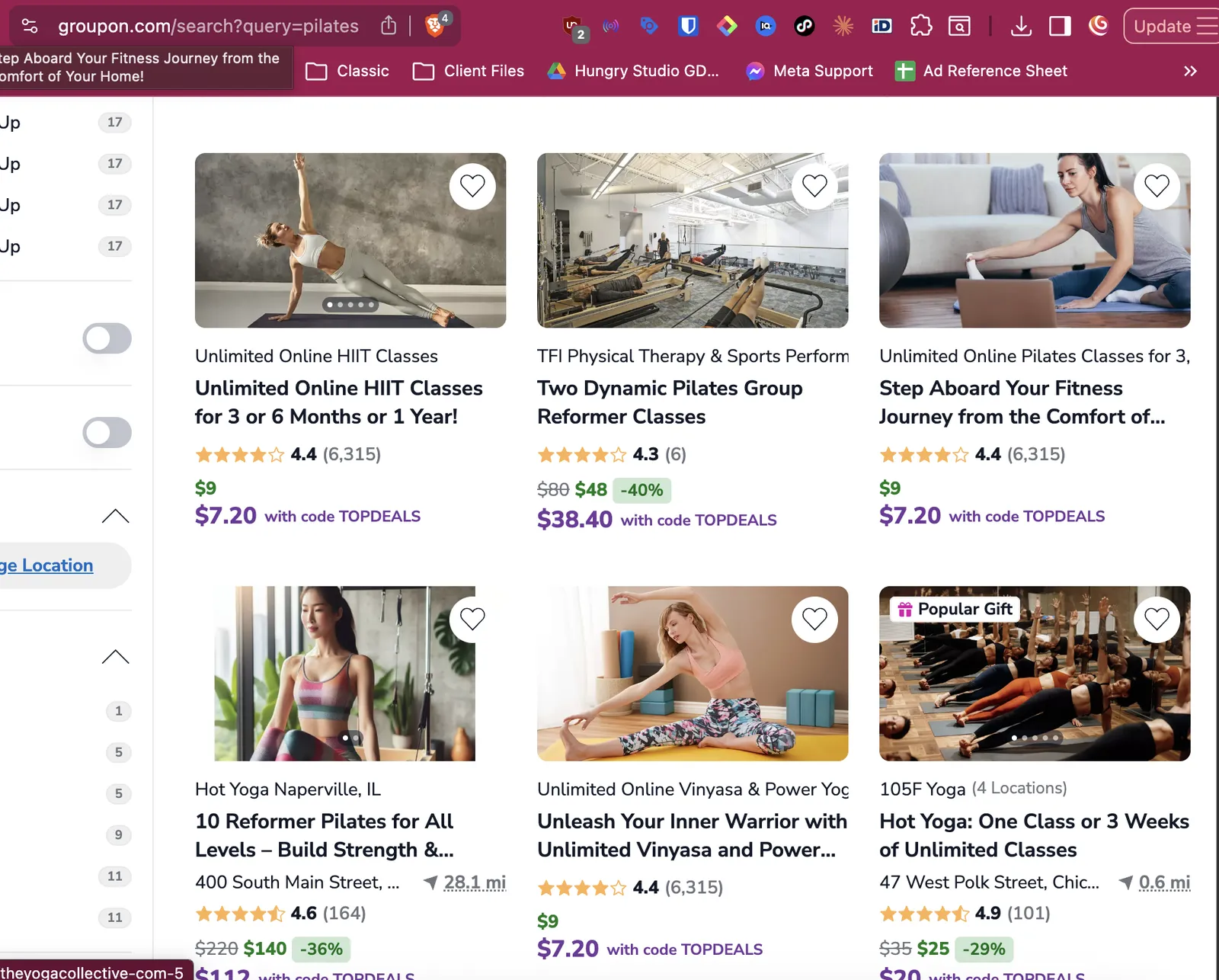
Here I’m using Pilates on Groupon as an example. You can see there’s more demand for the unlimited online HIIT classes for 3 months than for two group classes. This one’s got 6,000 redemptions, and this one’s got six. Same service, Pilates, but totally different redemption rates.
Even if the first business is only converting 5% of those people into a more expensive service (like one-to-one classes, I don’t know), they’re doing way better than the second one, who might be getting more money up front with the $38 deal but only getting about six redemptions.
So instead, be prepared to test two or three offers, with one to three angles on each.
Say offer A gives people $500 off their course if they sign up. You still need one to three different angles on it to test when you advertise. One angle might be “unlock your future with greater earning potential”. Another might be “follow your dreams and make your career about something you’re passionate about”.
Okay, so those are the five key mistakes and what to do to solve them.