
How I write copy for Facebook lead ads (incl. using AI)
 Written by Benjamin Boman · · 15 min read
Most facebook media buyers start out writing the ads just by looking up and referencing their competitors on the Meta Ads library.
The problems with this is:
- Their copy might be a bit crap, because you can’t see their stats.
- You don’t know what elements/angles they tried before.
- If it works, you don’t know why, so you can’t iterate the performance.
So over time, I’ve developed a process as a professional media buyer (Note: NOT a professional copywriter!) for writing ad copy that I think most beginners could follow that will improve your ad copy quality, even without being a creative genius.
I first walked through this process in a video in late 2024. The written guide below is the updated, longer version (with AI and research prompts), and the video transcript is at the bottom.
The Steps
As an overview, here’s how I do it for a standard static image or video ad particularly for lead generation:
- Pick an awareness stage. There are 5 awareness stages, this will direct how you write copy.
- Research. I find reviews for the brand or relevant competitors. If not, you can always use tools like Perplexity to reference Reddit sentiment.
- Messaging. Pick your messaging angles, which is the positioning of your ad. You need multiple to test.
- Body copy hooks. Write the hooks for your main body copy separately as these are the 80/20
- Body copy. Write the body copy the appropriate copywriting formulas such that they link with any body hook, but also can be tested against each other. E.g. Pain Agitate Solution (PAS) vs Before After Bridge (BAB).
- Creative headlines. Create Headlines for your creatives that communicate a clear offer, make a big promise, are relatable or intrigue further reading.
- Ad headlines. These headlines can be more to the point and super clear. A big promise, a curiosity hook or just the jazzed-up offer.
- Descriptions. While I often skip this part of the ad unit, when I do write them, I make them like a sub-headline on a landing page. Describe how you’ll achieve the ad headline or give supporting information.
- Supporting copy (dot points). These go on your creatives and in your forms. I do two sets, features and benefits so that I can test both.
Let me go through each in detail.
Which AI to use for Facebook ad copywriting
Pick whatever you like, really, I think they can all generally do the job with enough prompting and tweaking.
But if I had to narrow it down to two, I’d suggest focusing on Claude and Chat GPT, with Claude (as of March 2025) has the edge in writing more natural copy.
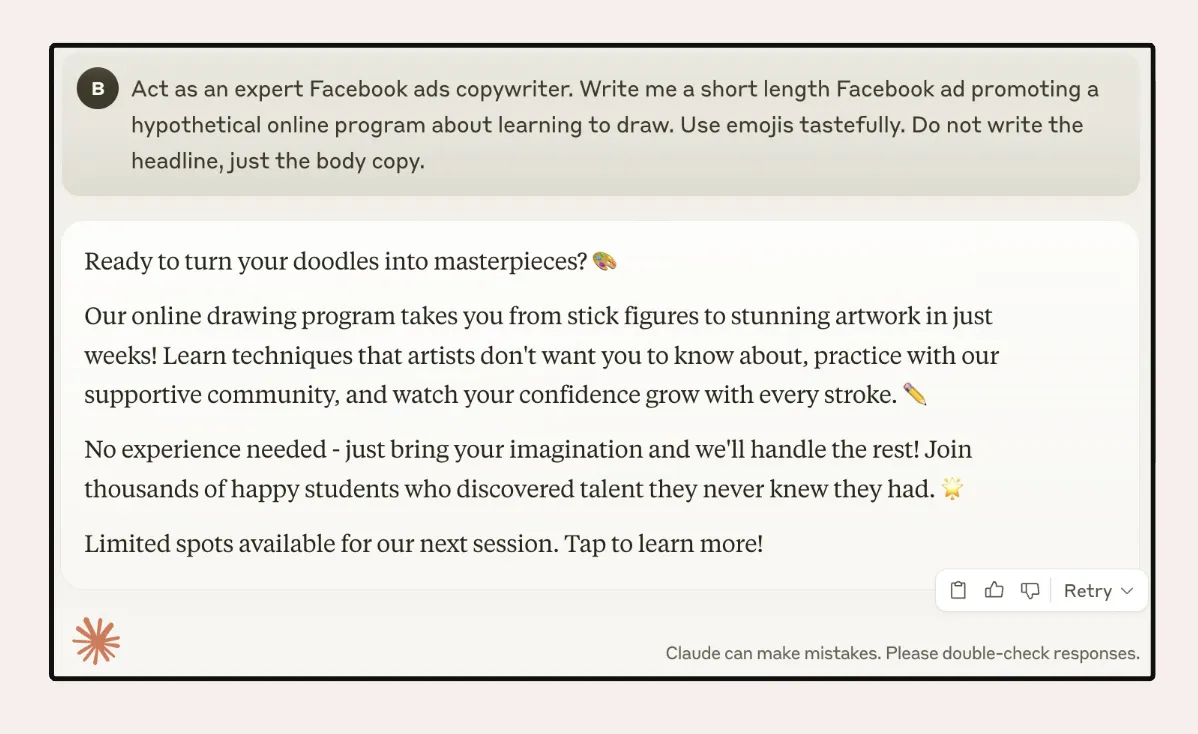
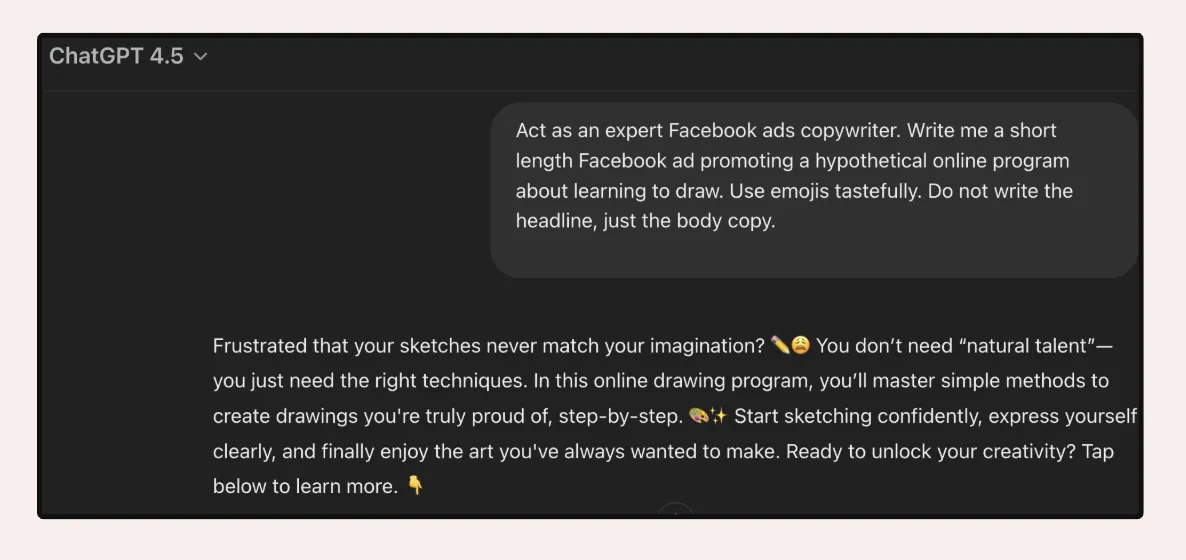
Examples from both with a simple prompt:
Act as an expert copywriter with a specialization in Facebook Ads. Write me a short length Facebook ad promoting a hypothetical online program about learning to draw. Use emojis tastefully. Do not write the headline, just the body copy.
Claude Sonnet 3.7
Chat GPT 4.5
Grok 3
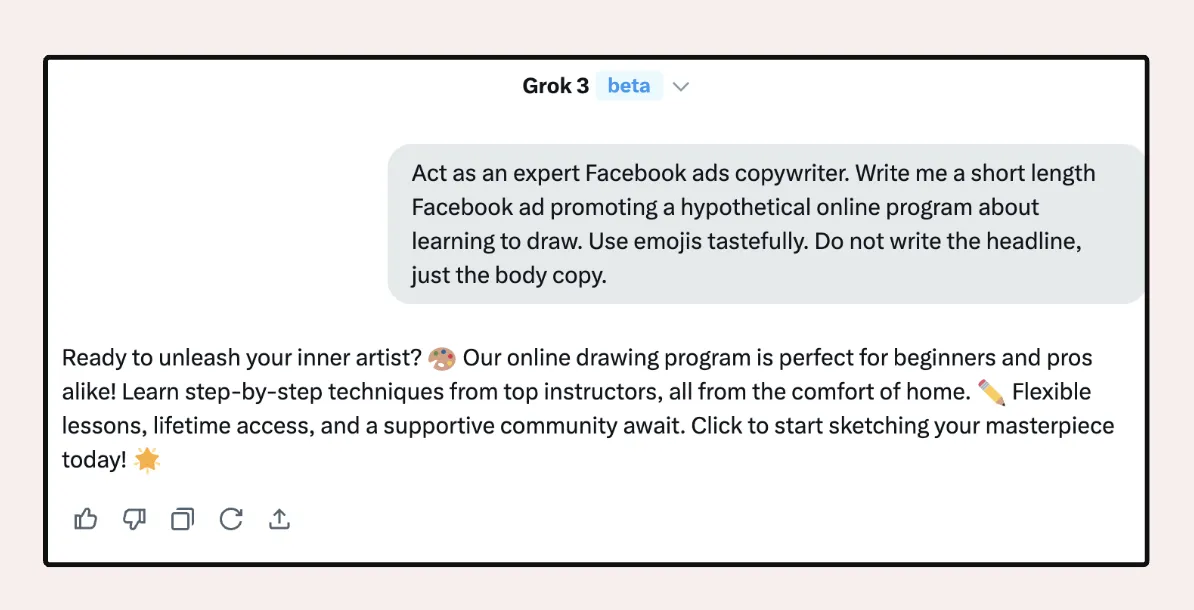
Out of the box you can see Claude is possibly the closest to being usable.
1. Pick An Awareness Stage
Without picking an awareness stage, for me, it’s a little unclear what the copy is trying to achieve in context. Is it simply trying to be interesting? Convince people? Prove something?
The 5 awareness stages represent different levels of… awareness, about the product or service that a customer may be in.
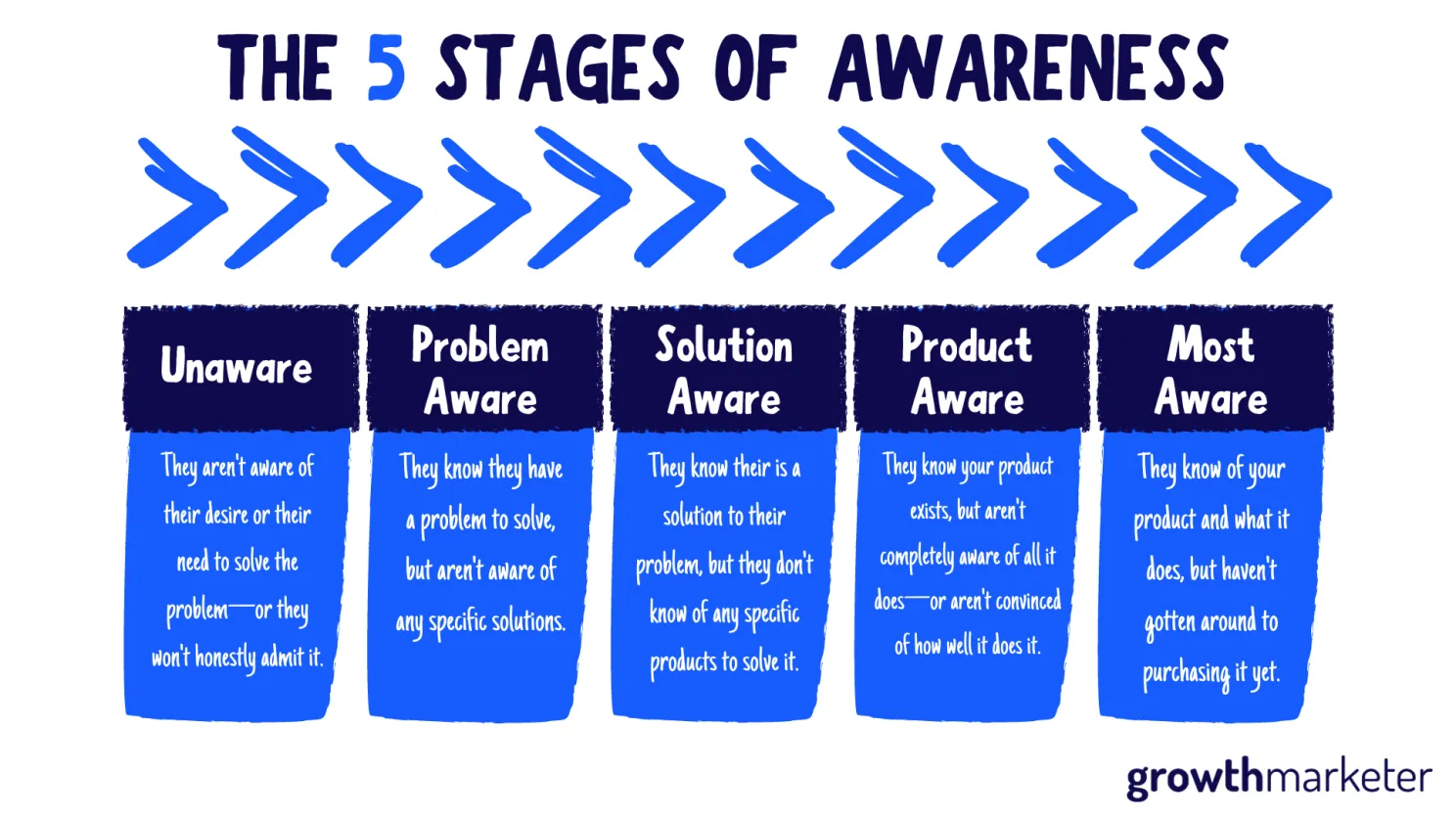
Image Credit: growthmarketer
Picking one gives direction to the copy. This example from feloncholy on Reddit (link) gives a good summary on how you would write differently for each stage:
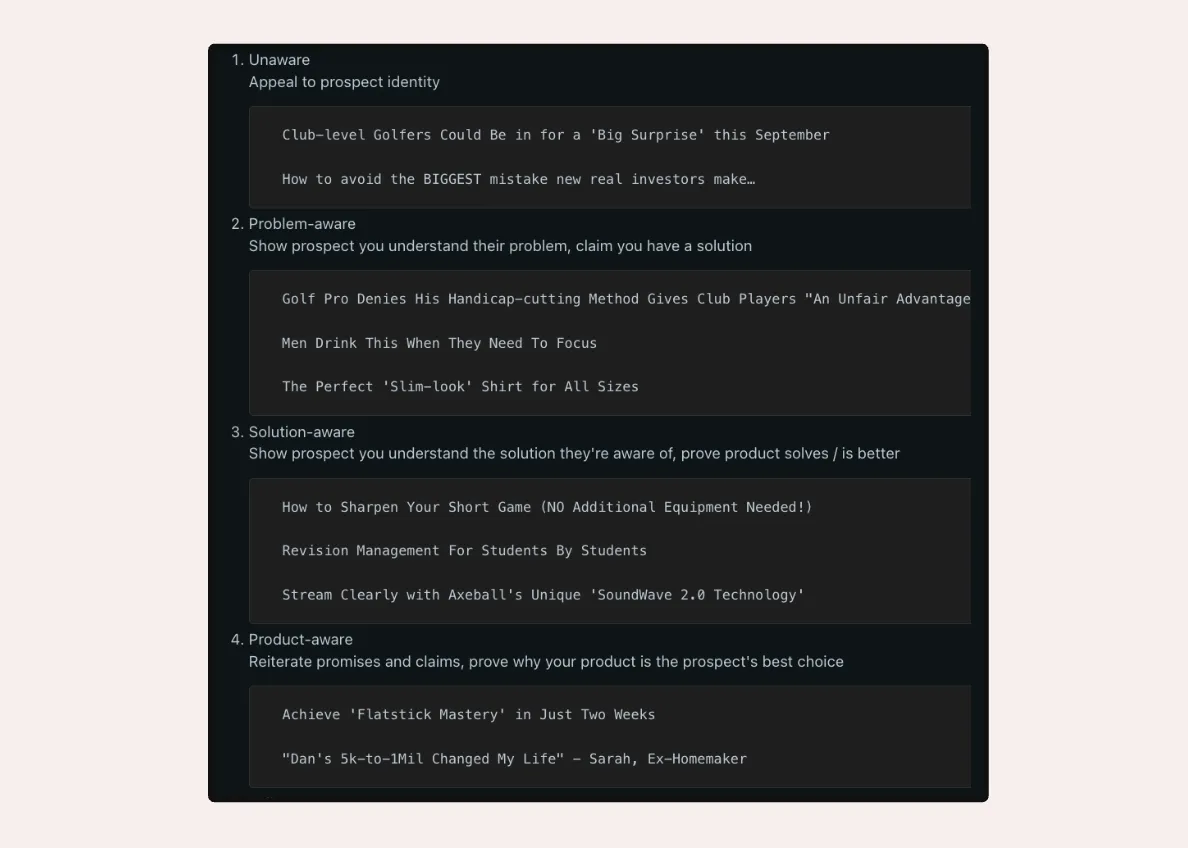
As you can see, writing for someone who’s unaware of the problem your product solves is completely different to someone who’s already aware of other solutions.
So if you were promoting say, an Improve Your Drawing program, to a totally cold audience it makes sense to target the problem aware stage folks knowing that you probably don’t have much audience to retarget down in the product/most aware stages.
2. Do Customer Research
Now that we have the awareness stage identified, we can do research to ‘get into the mind’ of prospects.
What I’m looking for in this stage is to understand the real life pains, desires and fears that people have. I’m hunting for strategic quotes and data-backed (as much as possible) information on perspectives.
Reviews are the easiest source
Reviews are basically a discussion forum about what people think about a product or service. A goldmine, really.
Go to Google and search the brand or a competitor and scroll down to the bottom of their reviews so you can copy all of them in one selection.
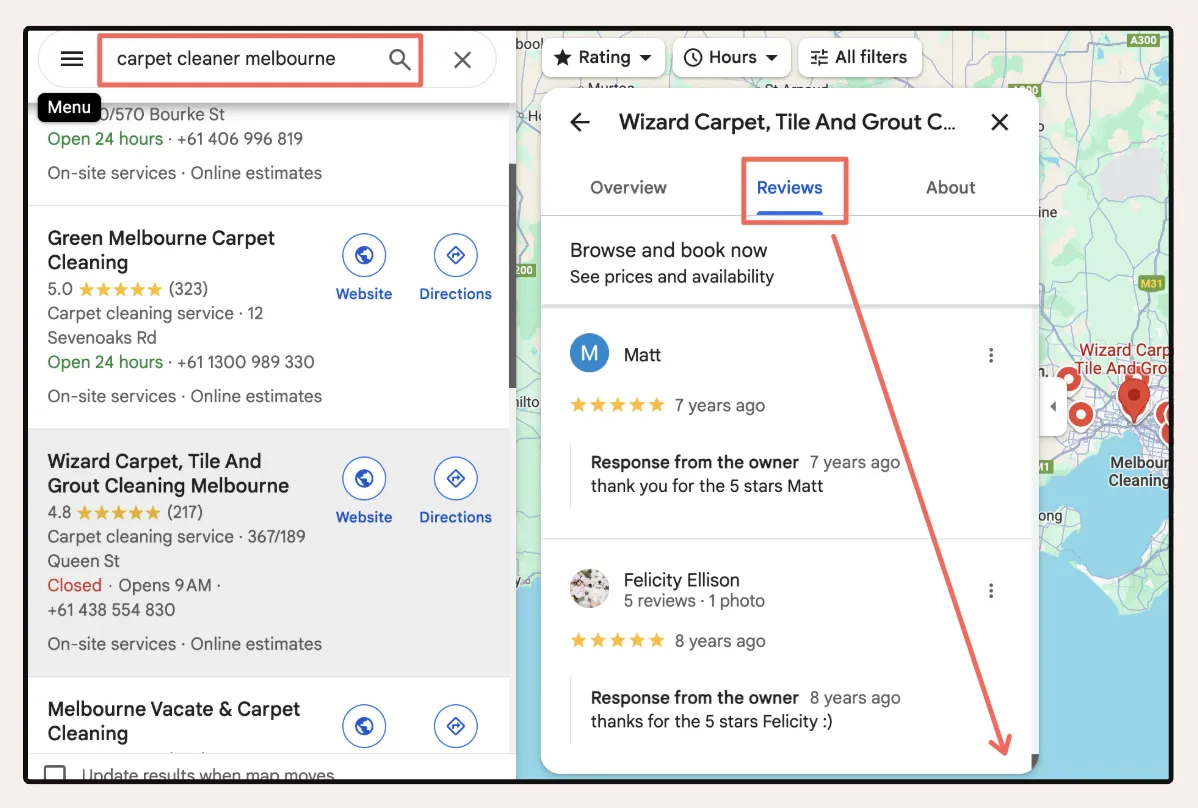
Then I’ll dump these and dump them into an LLM and use that to digest and find common themes and insights.
Act as a copywriting researcher. What are the most common pains, desires and fears people have about the product/service according to the reviews I've included below? List your insights and write how common (out of 5) each point is so that I can use them to write ads with perspectives, quotes or triggers that engage readers.
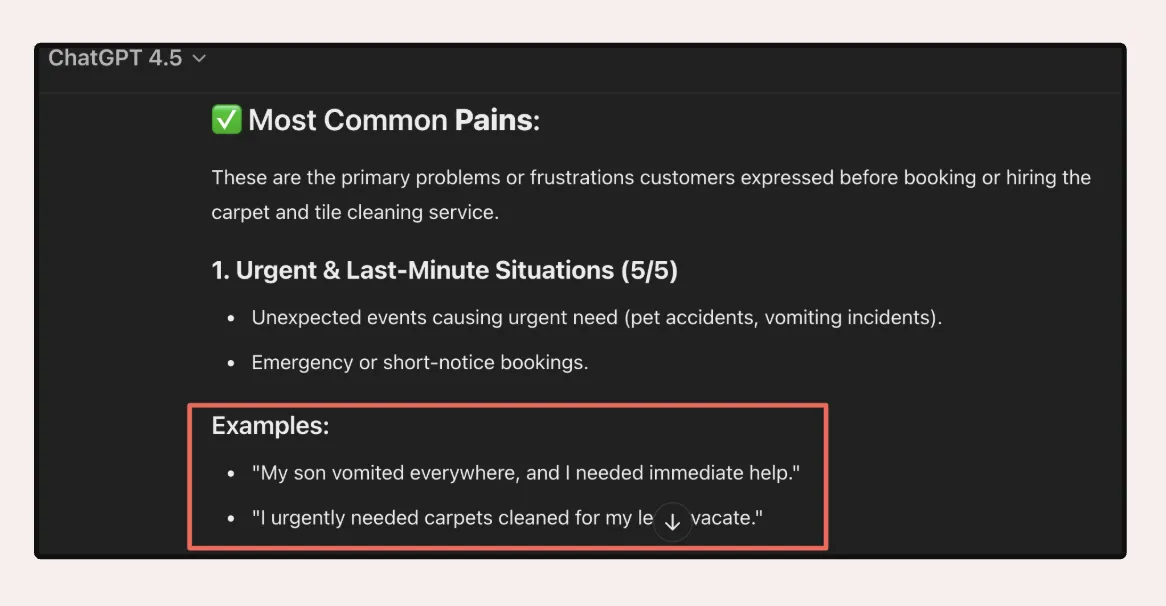
You can imagine, if this company was your client - these quotes would make awesome ad headlines, too.
Perplexity and Grok can survey the web and Reddit
Act as a copywriting researcher. What are the most common pains, desires and fears people have about online courses teaching beginners about electronics? List your insights and write how common (out of 5) each point is so that I can use them to write ads with perspectives, quotes or triggers that engage readers.
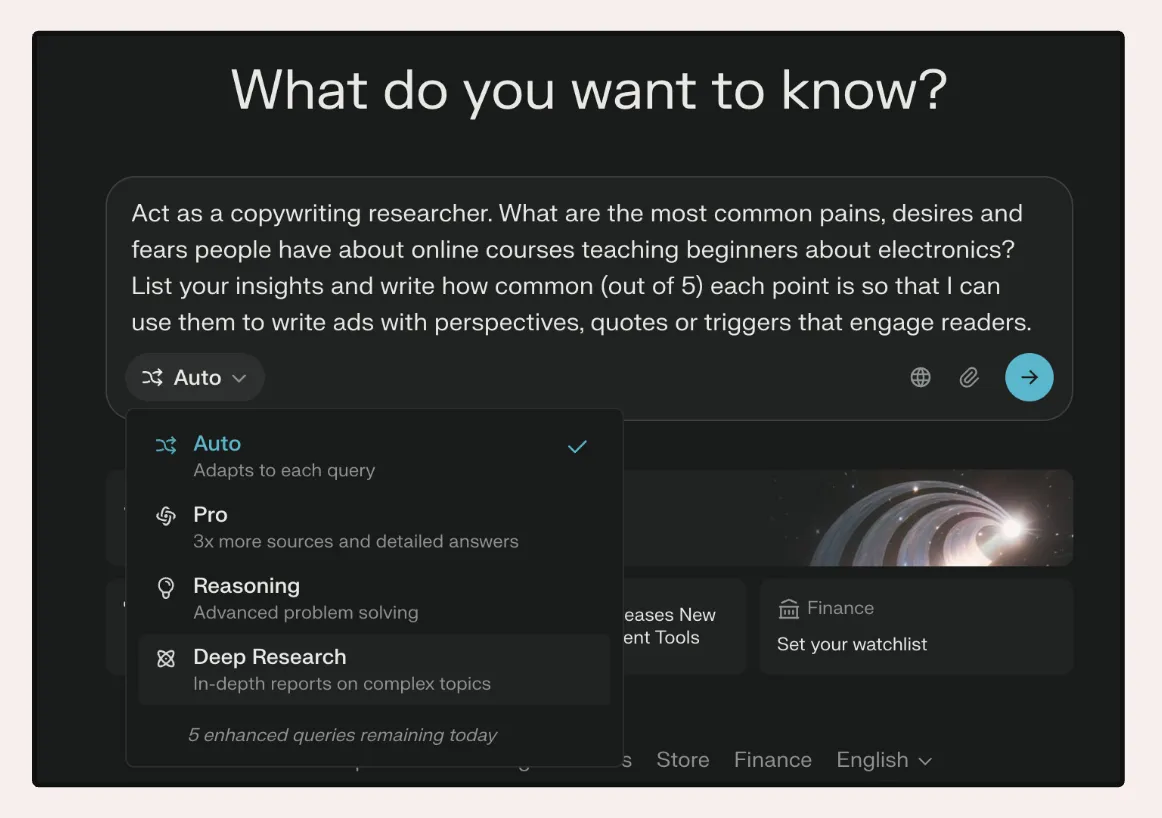
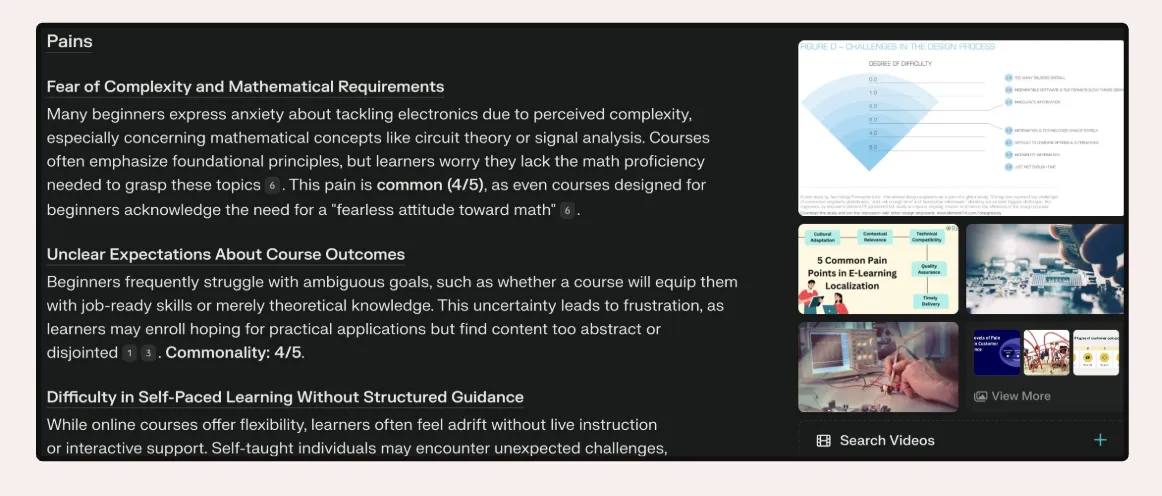
Example Results: Grok 3
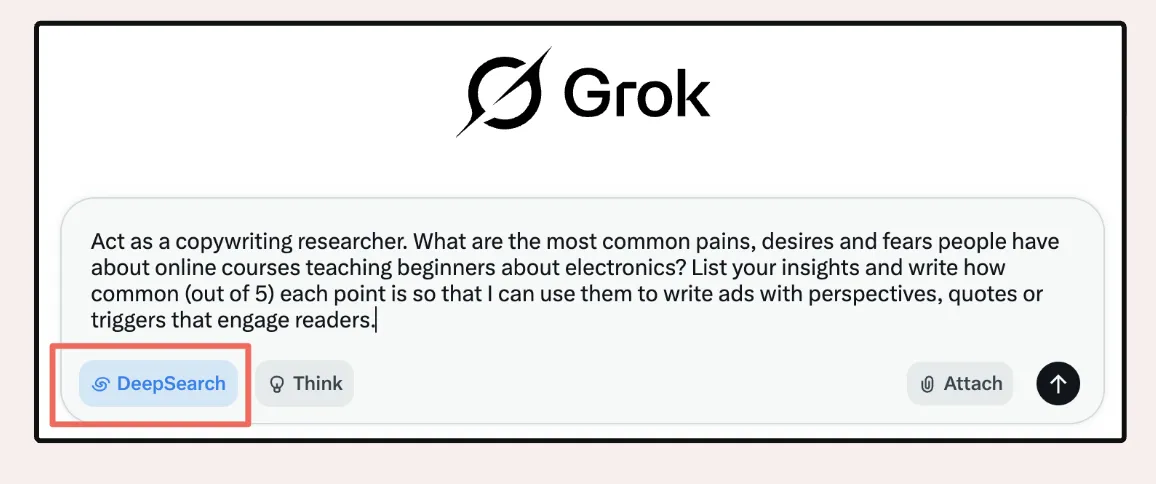
Sometimes I think Grok is actually better at research than other tools like Chat GPT or Perplexity
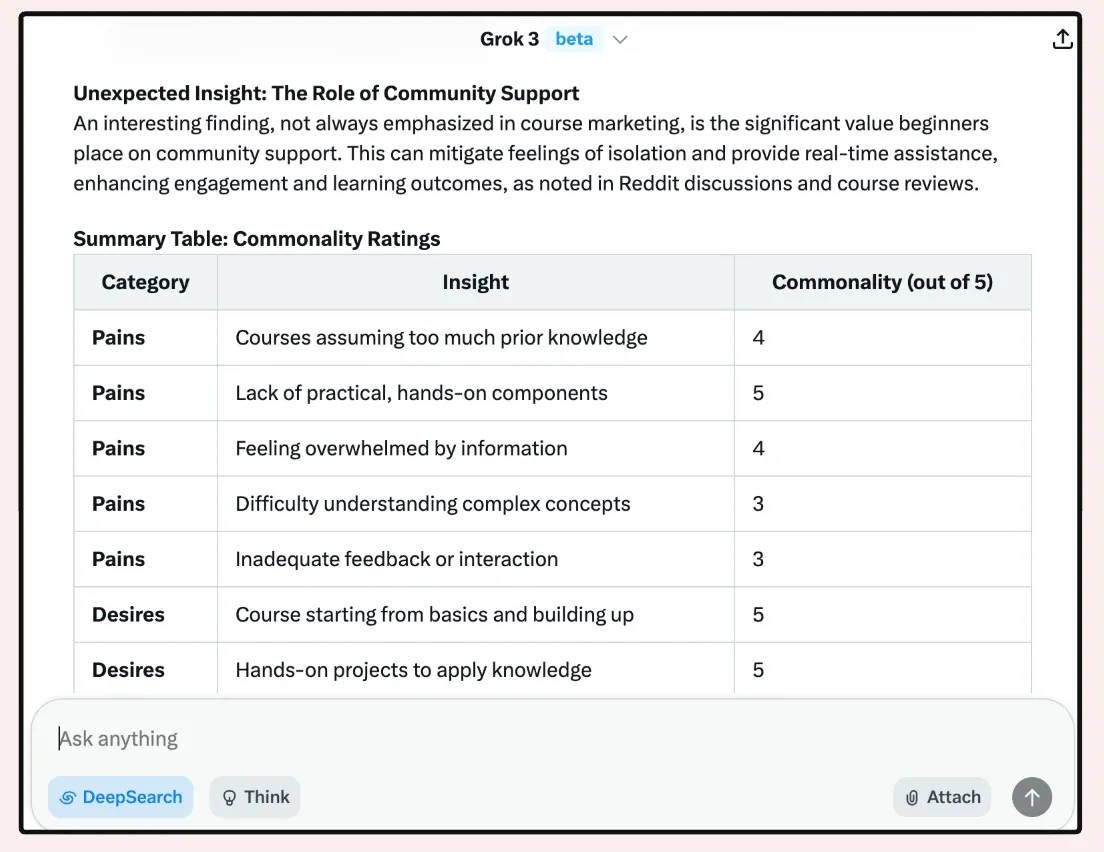
As you go through your research, pop all of this into a doc so that you can reference it when you go to write the copy.
3. Pick a Messaging Angle
With the research done, we can pick our messaging angles, which is the positioning of your ad. Messaging angles can be something like:
- For a drawing program, “The fastest way to get drawing your characters”.
- For the carpet cleaner, “The on-call solution for even the messiest problems.”
I like to choose 2-3 to test a time in order to A/B test.
Use the research from the previous stage to find out which messaging angles most likely to be compelling to the audience. You’ll also have to think about what the product strengths are, to make sure it can deliver.
4. Write Body Copy Hooks
Ok, ok. Now we can finally get to do some writing.
First thing is to tackle the body copy hooks. This is the most important because when you see ads on Facebook you’re going to see the body hook first on both Facebook AND Instagram.
⚠️ Instagram doesn’t even show the ad unit headline. So it’s doubly important to use this hook as your headline.
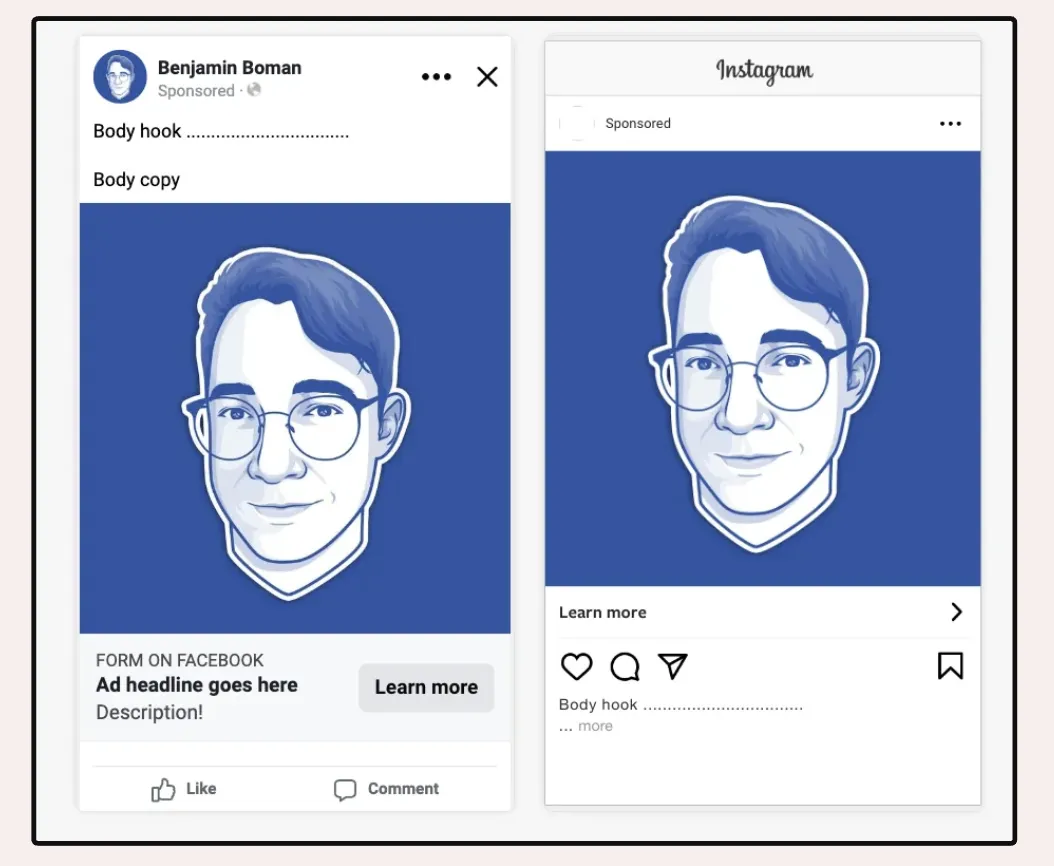
There are a bunch of options here. You can make:
- A curiosity or,
- big benefit type hook.
- You can also add an audience call out in front.
- “Hey {suburb} gents!”
- “This is the BEST way to get X without Y…”
Etc.
I’m a big fan of Andrew Hubbard’s advice (link) which is to play with the truncation on Instagram (see above) so that your hook makes sense even when cut off.
See where it says …more ? He means you should make sure that the beginning of your body copy hook makes sense before that … more cutoff.
Make each body hook aligns with your messaging and appeal/emotional transformation choices above.
5. Write the Body Copy
Now we can write the body copy. And rather than do it freestyle, I like using a formula so I have some kind of structure to work from. But there are many copywriting formulas to use, like:
- Attention, interest, desire, action (AIDA)
- Before, after, bridge (BAB)
- Pain, agitate, solution (PAS)
- Hook, story, offer (HSO)
- etc.
And while my favourite all-rounder is AIDA, the truth of which one is best seems to be that it just depends. Every product and awareness level suits a different formula.
So typically I’ll pick one or two formulas I feel best suit the product/awareness stage and write from that framework.
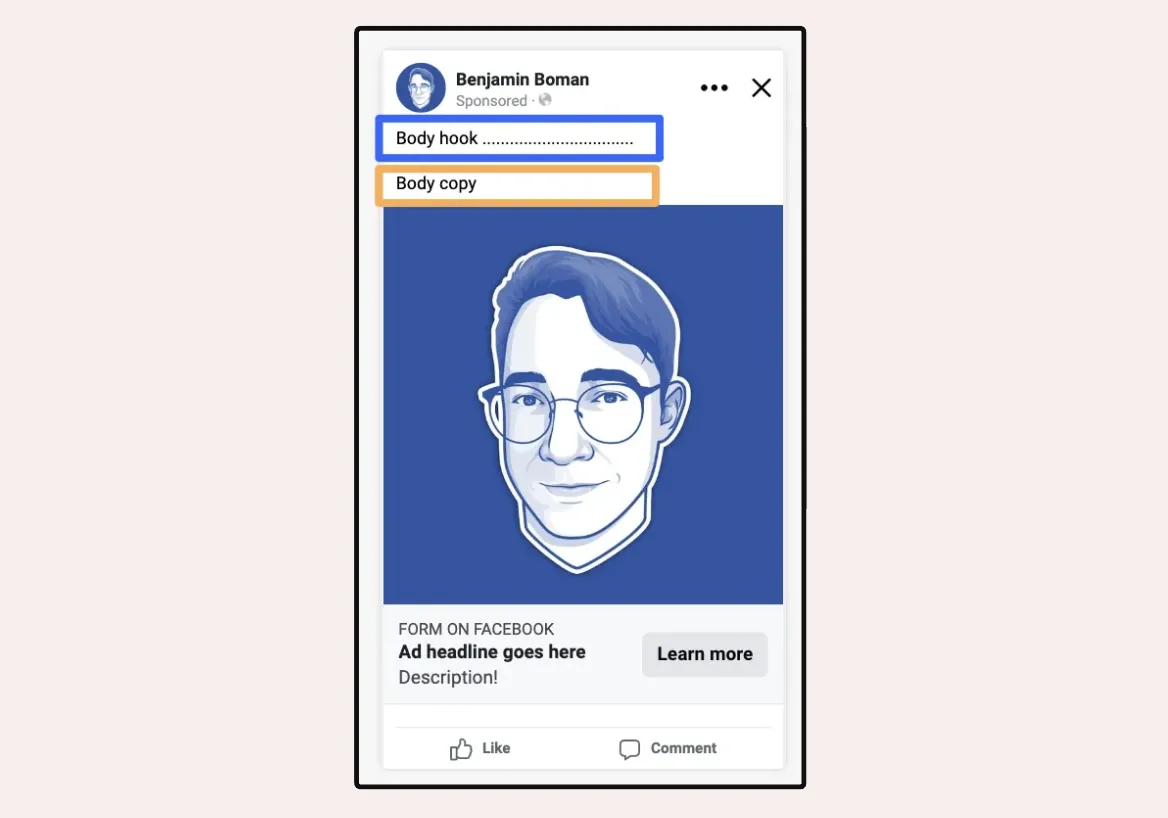
Importantly, I’ll write the body copy such that any body hook we made previously can be used with it, so that the copy becomes modular.
{body hook 1, 2, 3…}

{body copy}
This allows you to switch out multiple body hooks to test new copy variations of your ad over time and find a higher performing one for the same angle or appeal/emotional transformation.
I suggest writing 1-2 different versions based on 2 different frameworks for testing over time.
6. Write The Creative’s Headlines
Now we need to create Headlines for the creatives.
Everyone has a different view on this, but it seems to boil down mostly to headlines that that:
- Communicate a clear offer,
- Make a big benefit promise,
- Are relatable to a pain point, or
- Intrigue further reading - like stories and so on.
Ultimately we’ll need to test which angle works best but, without specific data I often feel that sometimes it pays to be more literal.
For example, a webinar would be better advertised by putting the name of the webinar as the creative headline. Versus trying to induce enough intrigue to make people click through to the landing page and sign up.
Meanwhile, if you have a super huge discount on something like a local gym, then using that discount as a ‘clear offer’ makes more sense than trying to promise a huge benefit. Having said that, they can still be defined.
Typically I’ll aim to write 2-4 headlines for each messaging angle. This is made to align for each emotional transformation or appeal.
7. Write The Ad Headlines
Surprisingly, I find ad headlines to be not that useful.
I guess it’s because most engagement tends to happen on Instagram these days which doesn’t even show the headline in the ad unit (though it sometimes adds them if you use Advantage+ overlays).
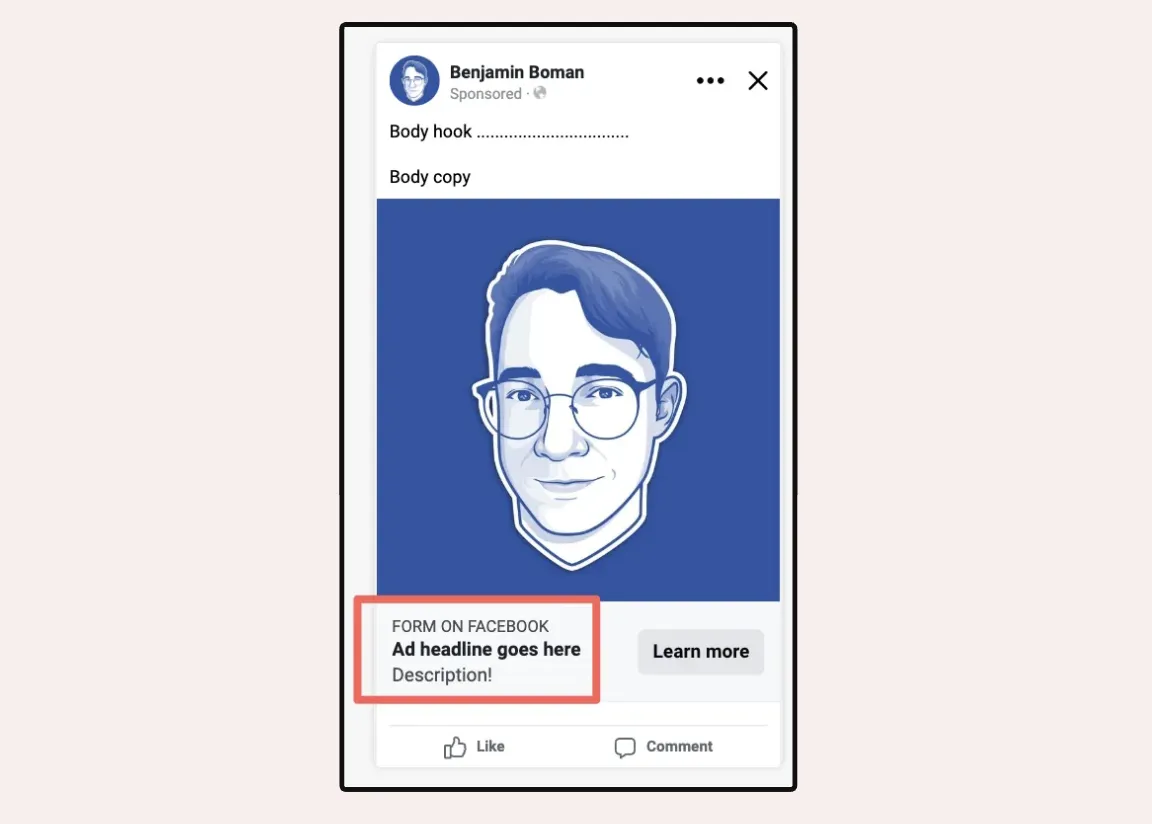
Regardless, there are a few ways to write them. These headlines can be:
- More to the point and super clear. “Book your free 30 minute Accounting Career Consultation”
- A big promise, “Learn to Draw Your Own Electrical Circuit Schematics in 4 Hours”
- A curiosity hook, “Is this the safest way to eat bread without bloating?”
- Or just the jazzed-up offer. “Join our LIFE CHANGING stretch-therapy program”
As usual, I will try to write 2ish for each messaging angles emotional transformation or appeal so that I can A/B test these over time.
8. Write the Descriptions
While I often skip this part of the ad unit since they only show SOMETIMES on Facebook, when I do write them, I make them like a sub-headline on a landing page. I took this point of view of Harry Dry who suggests using sub-headlines to give practicality to headlines.
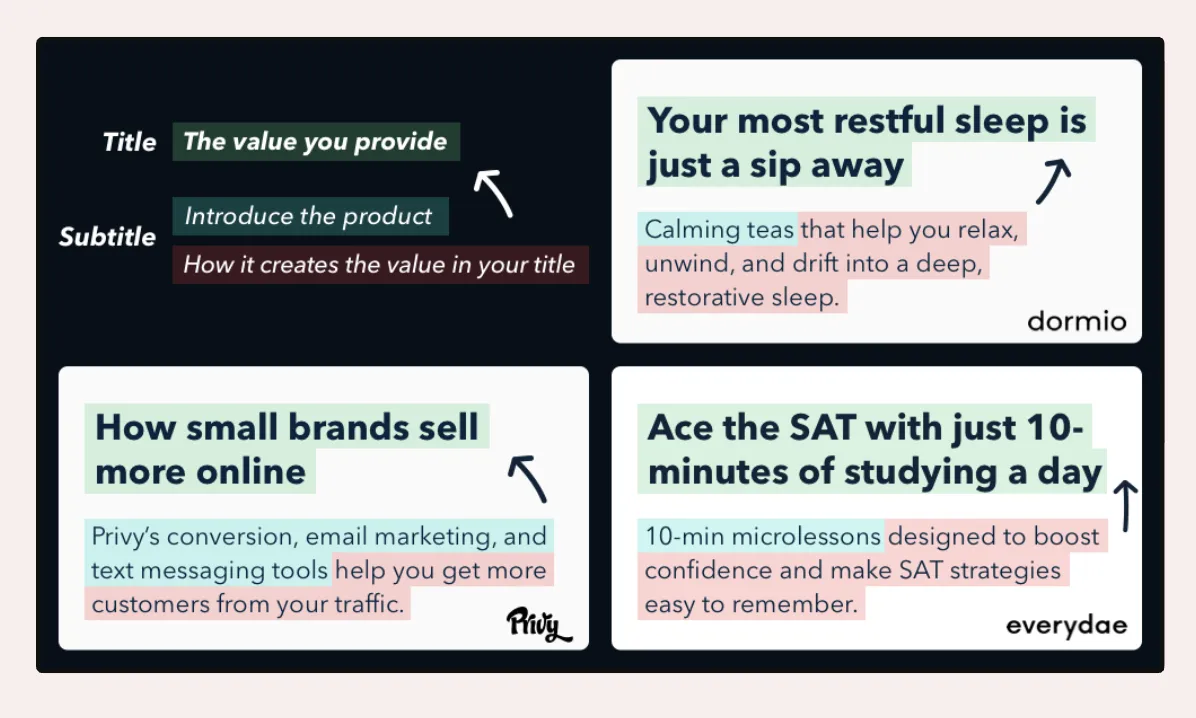
Image Credit: Harry Dry’s Guide on Landing Page Copywriting
As I understand it, Harry suggests using it to describe how you’ll achieve the ad headline or give supporting information that makes it feel more real.
I rarely add these.
9. Write the Supporting copy (like dot points)
For a lot of creatives, you’ll need to add dot points of about 2-3 words each.
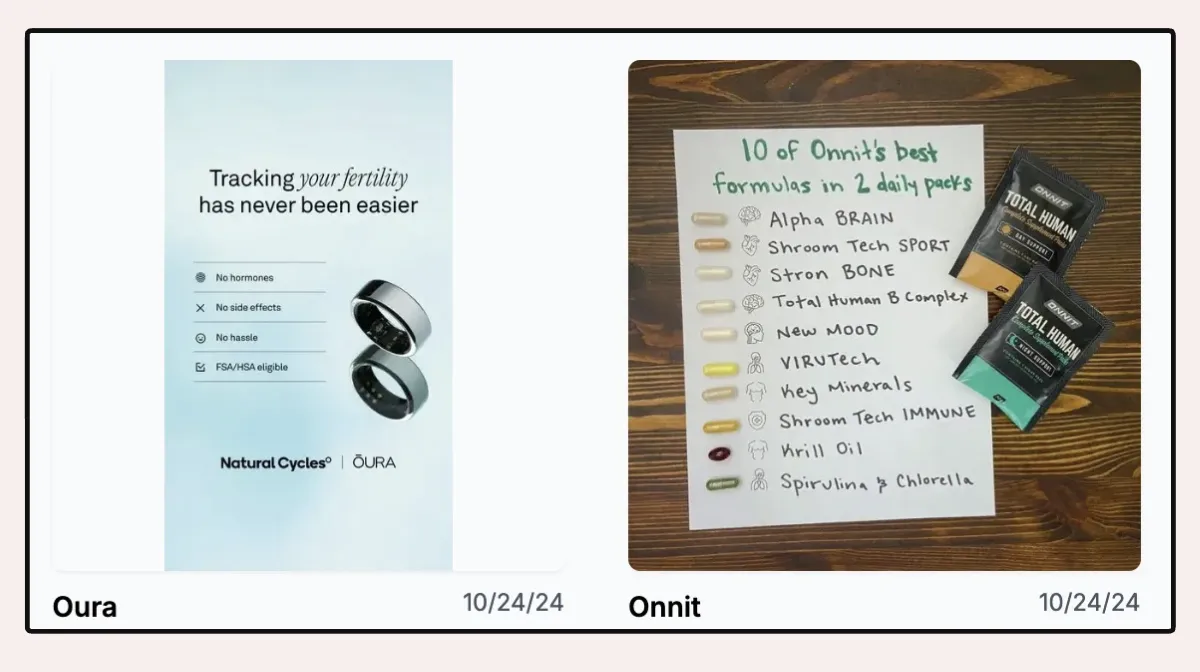
I suggest you write two sets of 5-8 features and benefits so that you can test both. I find that 2-3 words is the sweet spot because if it’s any longer it will be really difficult to fit them into the creative image.
Further Resources
Here’s a roundup of my favourite videos on the topic that you might like too:
- 📺 Adverting Campaign Planning: Message Appeals (link)
- 🛠️ SwipeJuice , a free place to find reference ad ideas (link)
Video transcript (2024)
This is the transcript of the video above, lightly tidied. It’s the earlier, shorter version of the process.
I thought I’d make a video about how I write Facebook ad copy. A disclaimer: I’m no copywriting pro, but I’ve made enough mistakes along the way that I can probably give advice if you’re completely fresh to writing copy for Facebook ads.
The problem with copying competitors
What a lot of people do, including me in the beginning, is look up competitors in the Facebook ad library, copy what they do and make it their own. That’s fine as a first step, but there are three problems:
- It doesn’t build an understanding of which points actually cause clients to take action. It’s not done in a thoughtful way where you can pinpoint “this is the messaging that makes people react”
- It doesn’t target a specific level of the awareness funnel. You don’t really know whether it’s working for people who are very aware of your product or not aware of it at all. You’re hitting it at random
- It’s hard to improve the copy in a modular, structured way. You don’t know how the copy is put together, so you don’t know which part to change to improve its performance
So here’s what I do now.
1. Pick the awareness level
The first thing I do is pick the awareness level. I took this graphic from Growth Marketer. There are hypothetically five levels of where a customer is in their journey:
- Unaware of the problem
- Aware of the problem
- Aware of the problem, with some idea of what the solutions could be
- Aware of some products
- Aware of your specific product
When I’m writing the copy, I pick one of these first. Something I’ve learned from people in the space is that you start as close to product or solution aware as possible, because you get fast results. But if you want to scale your ad spend, you have to move up towards problem aware, and maybe even unaware. I don’t do any advertising targeting unaware, but moving up to problem aware was really interesting to me.
One way to come up with ideas here is a tool like Perplexity. Search for the typical problems and pain points people have around a certain product or service, and force it to search social answers only, so it checks out Reddit. It collates a lot of the negative discussions happening there, and helps you profile the particular pain points to tackle at that part of the awareness chain.
For example, I ran ads for my own newsletter as a test, targeting solopreneurs and coaches. A problem they might have, related to my service (Facebook and Instagram ads), is that they want to grow their personal brand or coaching business, they know they have to be on social media, but they feel like it’s so hard to get traction. That’s just one problem. There are multiple problems at the problem aware stage, so I picked one to base my copy around.
2. Develop copy angles
Next, I develop copy angles. There’s a really cool framework from Hotjar called drivers, barriers and hooks, which breaks down three groups of reasons someone may or may not convert on your website:
- Drivers: what drives people to engage with your product or service. Think of them as motivations
- Barriers: what stops people getting over the line and contacting you or working with you
- Hooks: what actually persuaded people to move over
So with the problem marked out (problem aware: no traction on social media), I picked different angles:
- Stop wasting time trying to get traction, and use something that speeds up the results
- If you feel frustrated not getting traction, do something that gives you more control over the result, like Facebook ads
- If you’re tired of trying to get traction, here’s how to get better feedback on what people are actually interested in, in 48 hours
Three different copy angles on the same problem.
3. Write the headlines
From there, I write the headlines. I typically write them as:
- Curiosity based: “Here’s the coolest way personal brands are blowing up on social media without spending all day on LinkedIn”
- Statement based: a general pitch, like “Cut your time wasted on social media by 500%”
- Straight to the point: make it extremely clear what the product is. In my opinion this improves intent, because when someone clicks your ad, they get what it’s about. Here I wrote “Free newsletter: how to do Facebook ads for solopreneurs”, so it communicates quickly what it is and who it’s for
Note that the headline doesn’t show on Instagram, only on Facebook. But it’s still important, because if you use the Advantage+ overlays feature on the creative, Meta adds the headline on top of the graphic on certain placements (on Instagram, as a little bar at the top). If you don’t have a good headline, you’re wasting that opportunity.
4. Write the openers
After the headlines (probably three or so at this point), I write the openers.
When an ad shows on Facebook or Instagram, the copy is truncated to a preview, and people have to click “see more” to read the rest. So you need to write the beginning of the body copy with that truncation in mind. That’s what I call an opener.
I watched a really cool tutorial on YouTube by Andrew Hubbard, who says you can lean into this by opening curiosity, lining up the truncation so it creates an open loop, and closing the loop once they click “see more”. This actually helps your click-through rate. I’ve seen click-through rates go from about 2% on average up to 4%, sometimes 5%, depending on how good the opener was.
The opener I wrote was: “Solopreneurs, feel like you’re getting nowhere with organic social media? Me too.” I closed the loop not with something amazingly clever, just a bit of empathy to connect with the reader.
I write at least two openers, and ideally two for each angle. So with three headlines, one per angle, I write two openers for each.
5. Write the body text
Next is the body text, which comes after the opener. I like to keep it fairly neutral, basically a pitch and a CTA. But it depends on the copywriting framework you’re using. With before, after, bridge (BAB), for example, the body is the after and bridge, and the opener is the before.
I try to write two variations, but often I only use one to begin with, then develop a second and third later as I iterate. You can get away with one in the beginning if it’s fairly neutral.
6. Test and iterate
Now you should have three to four headlines, at least two openers (ideally two per angle), and one or two body copies. So you can run testing:
- Run one headline per ad, with an opener that matches that headline’s angle
- Use the same body copy for each of those ads
This helps you find out which messaging is most effective for that problem. Then you keep writing new headlines, openers and body copy that lean into that problem, so you get better and better results as you cycle the ads every 7 to 14 days.