
Marketers are sleeping on Facebook instant lead forms
 Written by Benjamin Boman · · 4 min read
Most people tend to think of Facebook lead generation or conversion campaigns as being almost entirely reliant on landing pages built on something like Clickfunnels.
But that’s not the full picture. There are plenty of cases where on-platform lead forms can actually be more effective than landing pages.
With the cost per conversion rising across Meta platforms like Facebook and Instagram, lead forms are worth considering. Because the conversion takes place within the platform, it’s often cheaper. Meta can more easily gather data and optimise for conversion actions compared to when you’re using an external landing page.
Plus, you can leverage Facebook’s prefill functionality to improve form completion rates, since the user’s info is already populated. (Of course, there are some drawbacks in certain contexts - but used properly, it’s a powerful feature).
Here’s some ideas:
1. Lead forms can help you build your list for less
Since the conversion happens inside Facebook, lead forms are often cheaper - which makes them ideal for growing your email list.
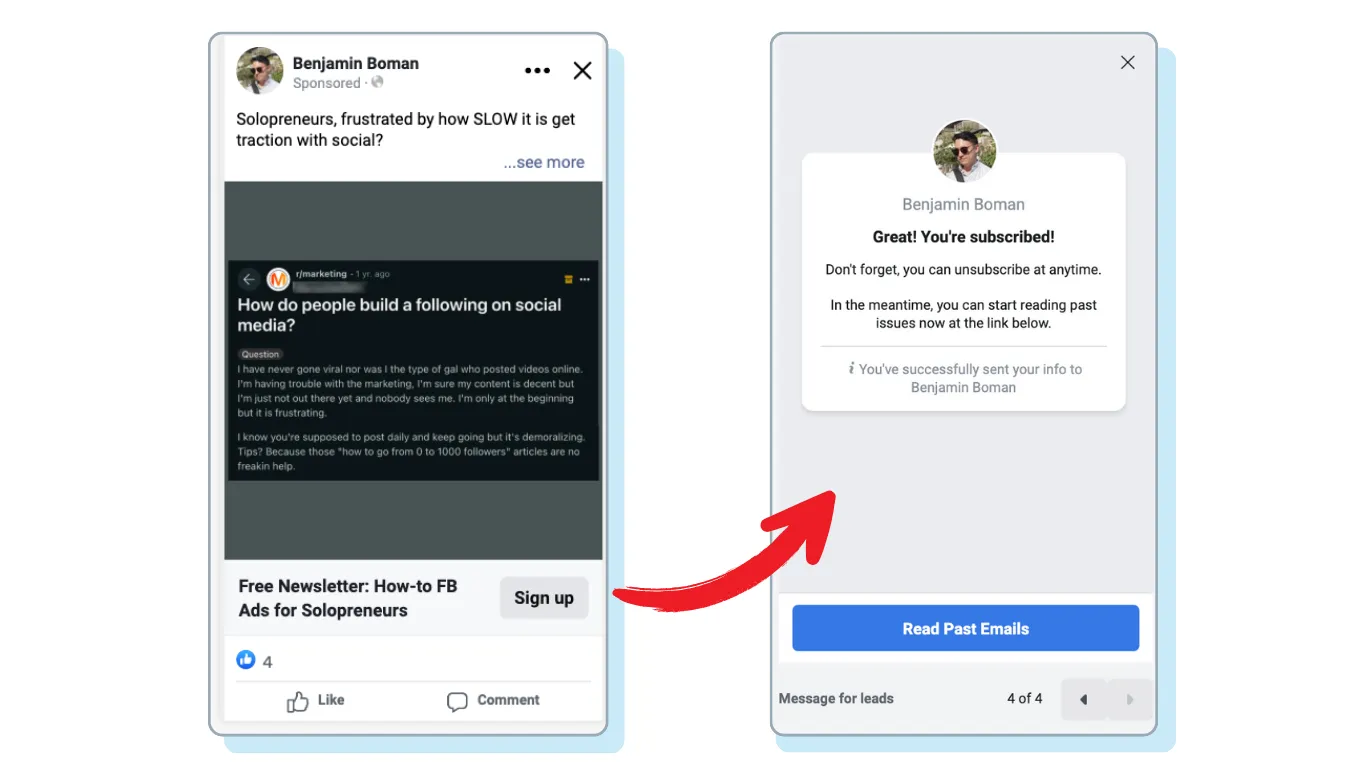
Most creators are used to offering lead magnets via landing pages. But you can get a similar outcome with a lead form by setting up the final CTA button to link directly to the lead magnet itself
⚡️ Tip: You can send users to your profile and encourage them to check their email for the download. That nudge can help prevent your message from ending up in spam and encourages actual engagement.
Sometimes, you can get signups for as low as $2 - $3 with lead forms, while a landing page might cost $5 - $7 for the same result.
And, that doesn’t mean the leads are poor quality.
With the Facebook lead centre (their built-in CRM), you can give feedback on lead quality. For example, you can move people who open your emails or click through into the ‘converted’ column. Then adjust your ad set to optimise for converting leads - helping Meta deliver even better signups moving forward.
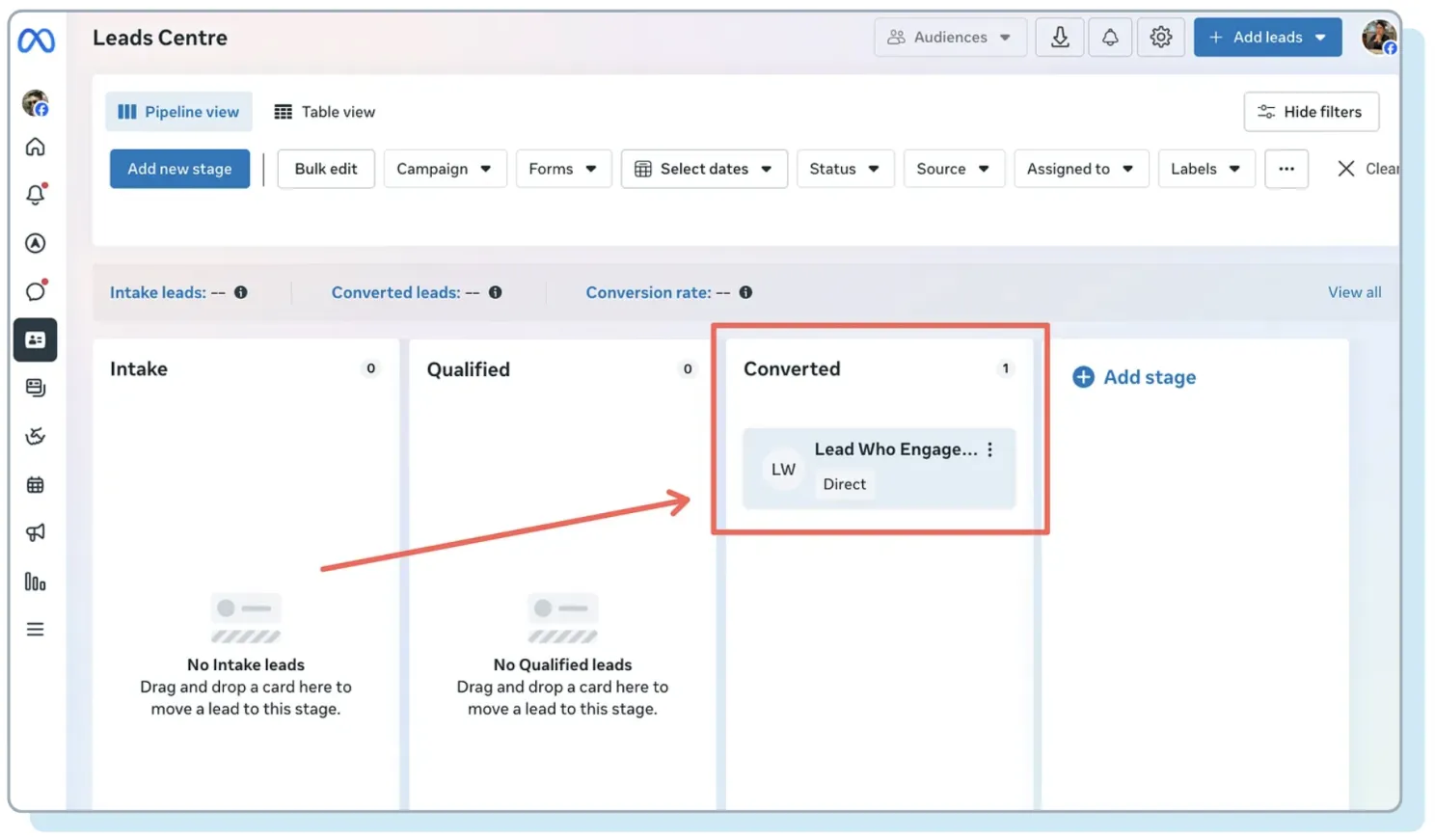
2. You can layer in a second objective, like building a Facebook group
Lower costs open the door to creative stacking of offers. For example, you can run a lead form campaign to get people to opt into a lead magnet - but also encourage them to follow your page or join a Facebook group.
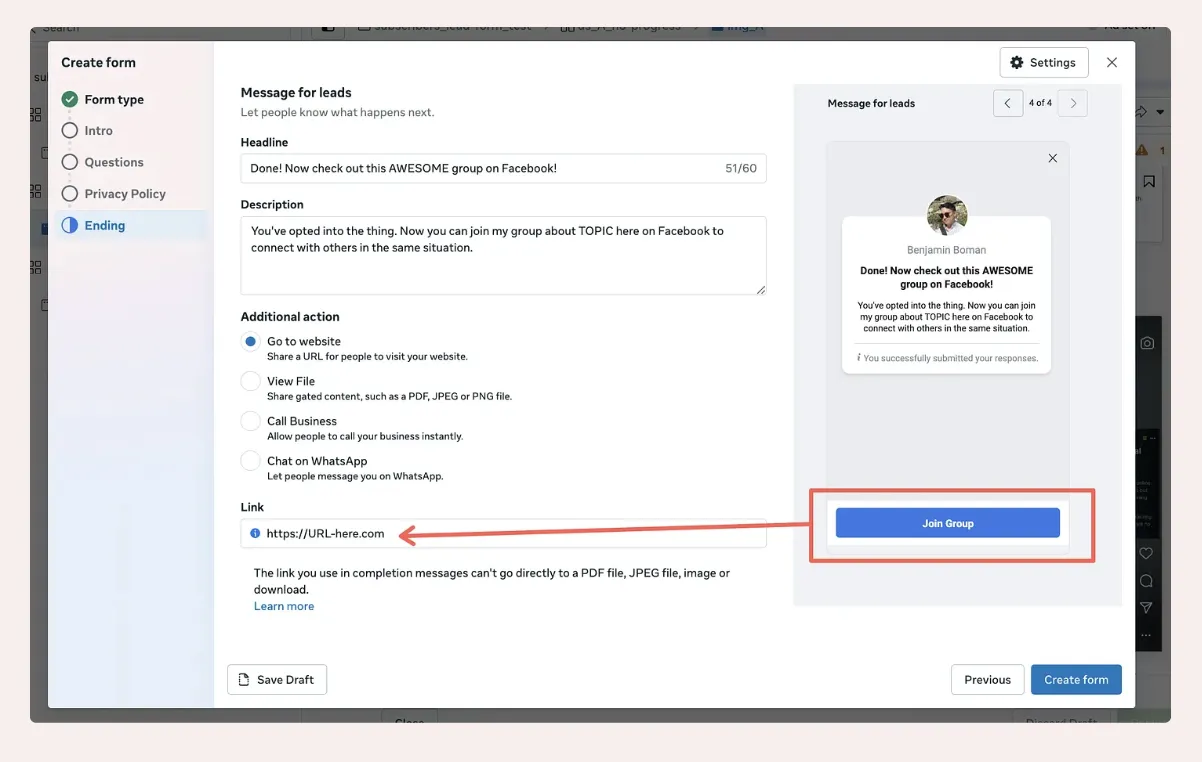
Using the final CTA button on the form, you can direct users to a specific group.
This gives you a second channel for nurturing people - beyond just email. So if you already have an active community that helps convert browsers into buyers, this becomes a smart, low-friction move.
3. You can get people to book calls themselves, without following up
A common misconception is that you need a landing page to get booked calls. Not true. You can absolutely drive bookings via Meta’s instant lead forms.
Collect the user’s name, email, phone number through the form.
Then use the final CTA button to send them to your calendar booking page.
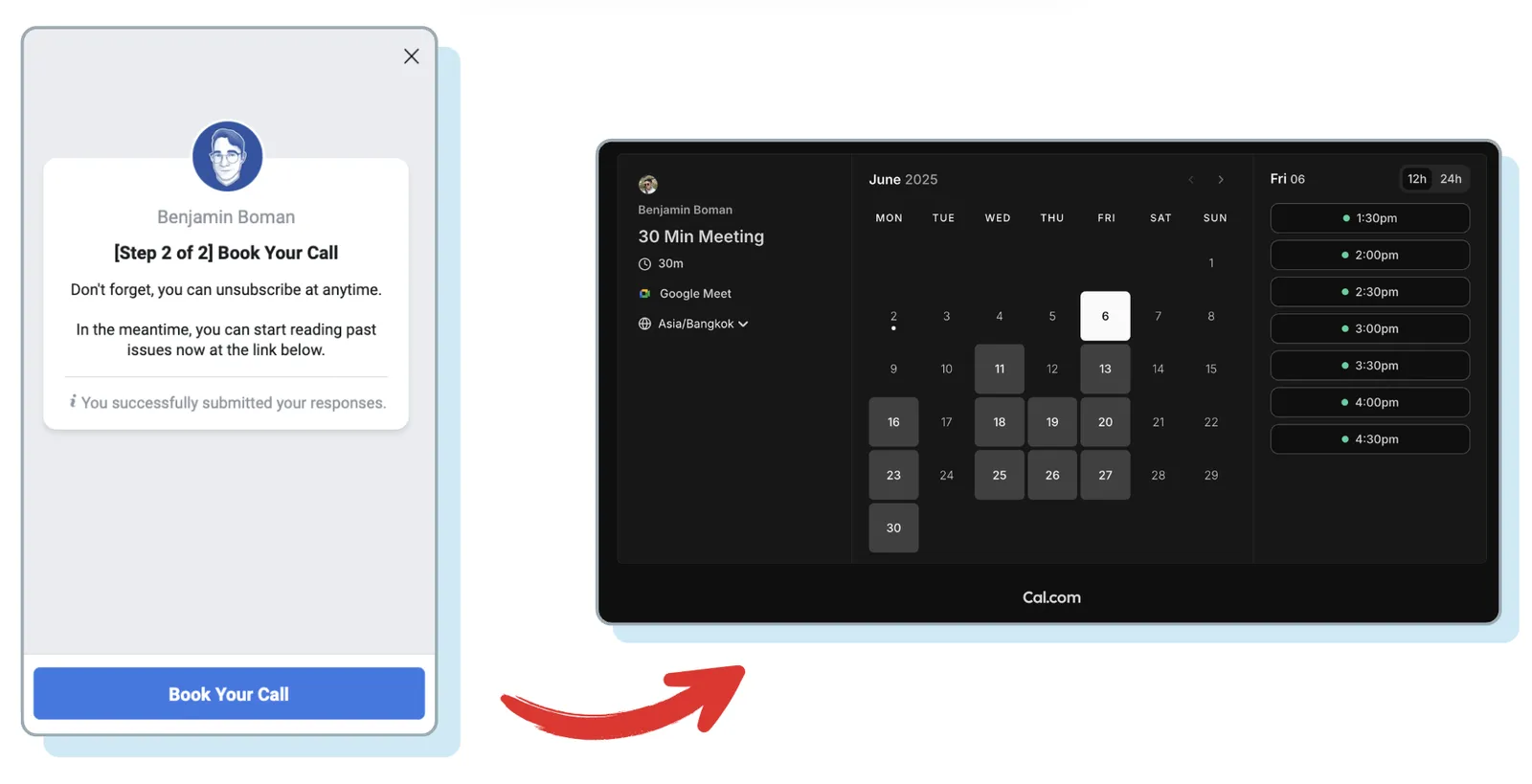
To make this work well, make it super clear on the final screen that there’s one more step - use a headline like “Step 2 of 2: Book Your Call Now”.
Add a short message explaining they need to click the button and choose a time with your team.
This setup can be particularly helpful if you’re starting from scratch and don’t have reliable data from a landing page. Often, 15 - 20% of people who complete the form will go on to self-book - giving you a lower cost per booked call than traditional funnels.
You can use then use lead centre to improve results over time, too by moving only self-bookers to the ‘converted’ column. Eventually, you can go a step further and filter for qualified applicants who booked - so Meta learns to send you leads that are both interested and the right fit.
For example, one client I worked with was getting just a ~16% show rate for booked calls through lead forms. We started using the lead centre to mark only the people who actually showed up as ‘converted’. After just one week, the show rate increased to nearly 40%.
How to get started
Consider testing lead forms for different objectives - whether it’s growing your list, booking calls, or building your Facebook group. You might find you can lower your cost per lead and maintain solid quality at the same time.
And there’s no need to go all-in overnight. Just run a small test - maybe $25 or $30 per day. Or even $10 over a longer time frame.
Use the lead centre to track and optimise for the actions you care about - like booked calls, email opens, or group joins. Then compare how it performs over the month against your landing page funnel.