
How I structure lead gen Facebook ad accounts for creative testing and scaling
 Written by Benjamin Boman · · 5 min read
Got this question from a friend:
“How do I structure testing on Facebook ads?”
A huge question, even if you narrow it down to just lead generation (not eCommerce) campaigns. There’s the technical structure and creative testing process. So let’s tackle the technical structure first and I can write about the creative testing process later.
For the technical structure there are many approaches each with pros and cons. It seems to ultimately come down to your preference on:
- creative control
- management simplicity
- spend efficiency
While most structures emphasize putting one business/product line per campaign, their particular adset and ad structure varies.
So if you want to nerd out about account structure, here are the 3 main setups I’ve seen and the one I am using below:
To skip to my preferred setup, scroll to point 4 below.
1. Plain Vanilla
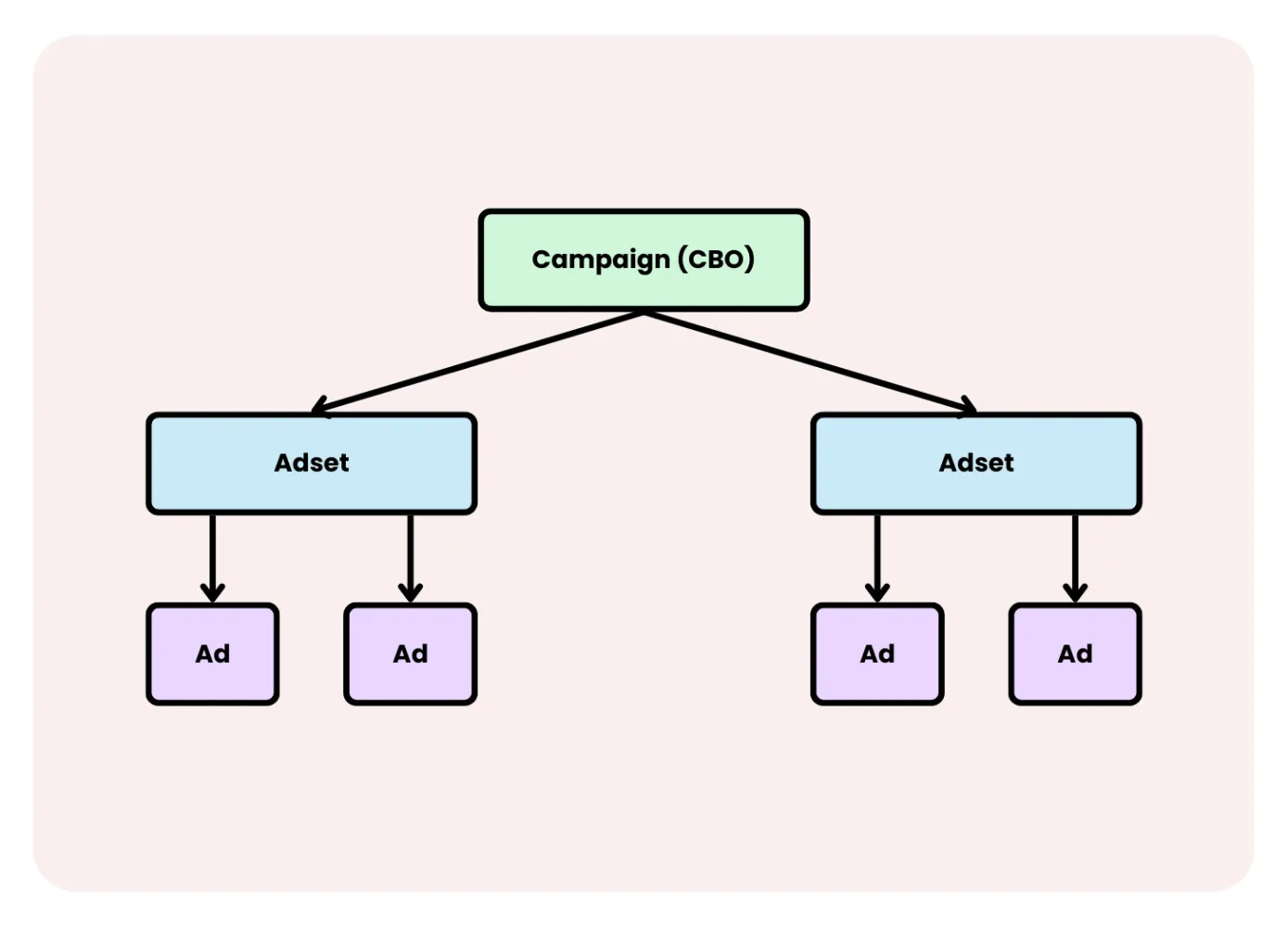
One campaign for each business line with Advantage Campaign Budgeting (CBO). One adset per target audience (typically 1-3 adsets), and 2-5 ads in each adset. To optimize the account, you simply increase/decrease spend 20% every few days, turn off poor performing adsets and ads and replacement.
Pros:
- Simple
- Standard
- No overlap on ads or targeting
Cons:
- Poor control over which target gets more budget
- Poor control over which ad gets more budget
- Meta will naturally prefer videos over static images
- Testing ads means editing adsets (by adding new ads and turning off old ones) so that resets learning.
I typically use this approach for very small and simple ad accounts that don’t require much testing.
2. Automated
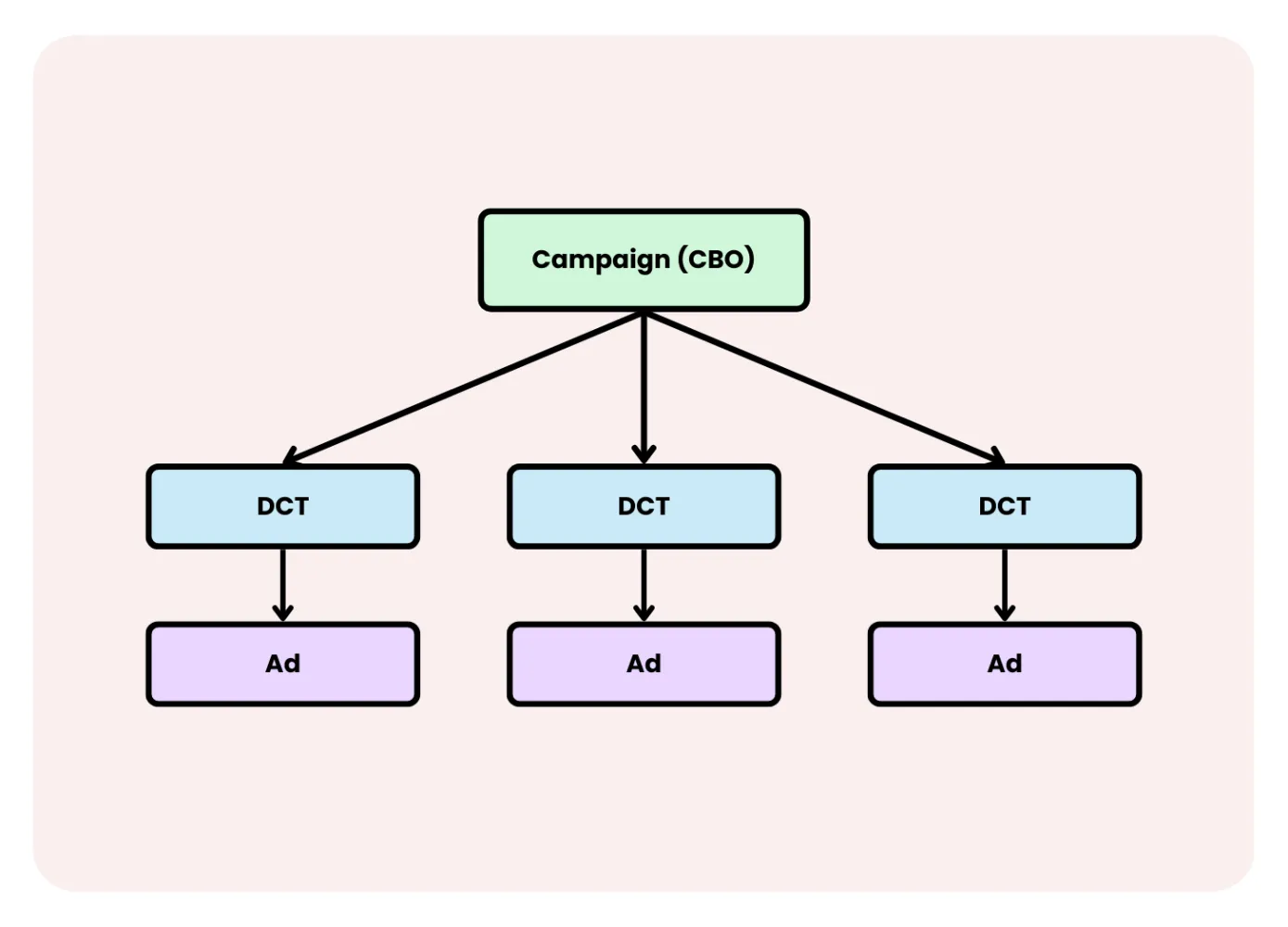
Popularized by Charlie T, this setup brings everything into 1 CBO campaign with 2-4 (for example) DCTs. To optimize the account, you increase/decrease spend 20% every few days, launch more DCTs and turn off underperforming ones over time.
Pros:
- Nice and simple
- Easy to manage and review performance
Cons:
- Audience overlap
- Creative overlap if you’re doing message testing. I.e. you’ll need to have two DCTs with the same creatives but different copy
- Reliance on Meta to properly test/discover winners
- Meta is likely to prioritise videos over images
This is awesome, if you really trust Meta. The argument driving this approach is that Meta’s AI knows best and giving it the steering wheel completely is likely the most efficient process.
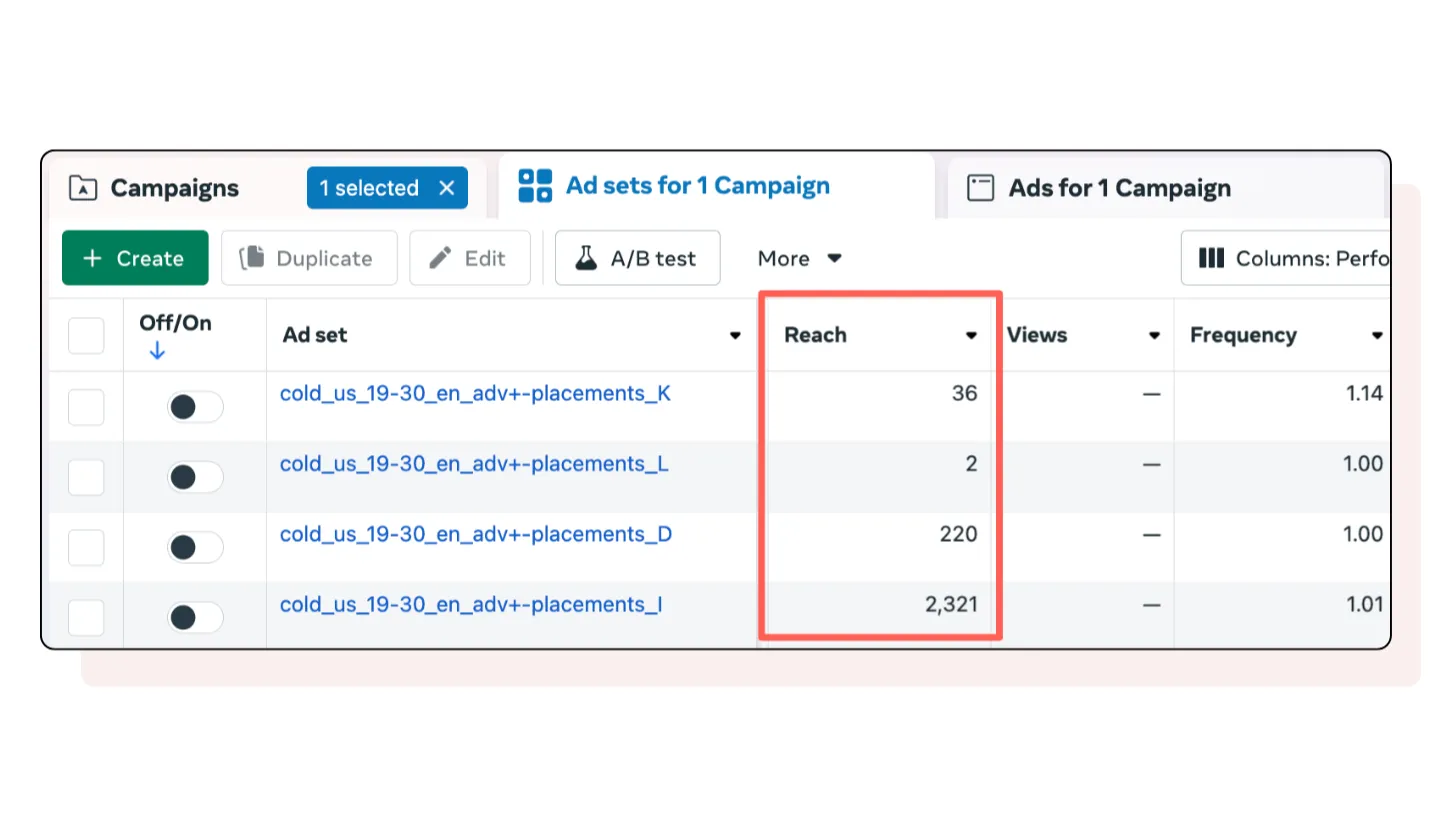
The problem I have with this approach is that you can’t trust Meta to give things a fair go. For example, I’ve launched new adsets to compete in the same CBO campaign, and they’ve received just 2 impressions for around 7+ days. How does Meta know whether those ads are good or not if they’ve not even tried them?
I’ve also had instances where an ad was given no attention by Meta via the CBO ad spend, but when given it’s own budget (forcing it by using adset level budgeting) it performs.
Those two experiences don’t gel with this rationale.
3. Separated Testing & Scaling
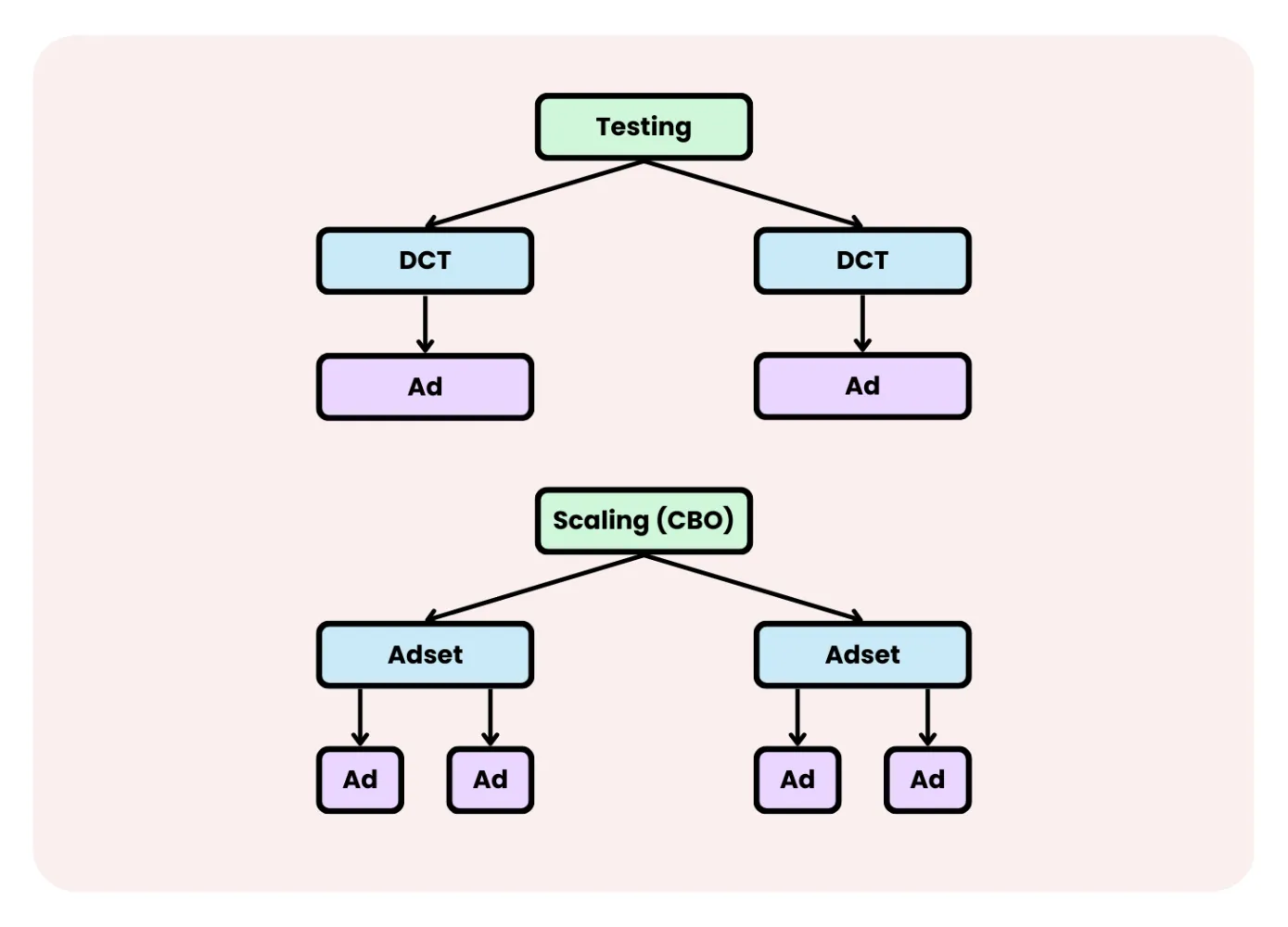
A blend of the two styles above, except better suited to identifying winners and spending more money on those.
You will have 2 campaigns here.
A testing campaign with adset budget optimization (ABO), with say 10-25% of your budget for testing ads. You’d run Dynamic Creative Tests (DCTs), using the Dynamic Creative option on the adset settings level. Which means 1 ad per adset. I see most advice saying to run 2-4 DCTs at a time.
For your scaling campaign, it has 80-75% of your budget and uses the winning combinations of headlines, copy and creatives from the testing campaign to run them as ads in 1 or more adsets (depending on how many targeting audiences you have). You identify these using the breakdown report.
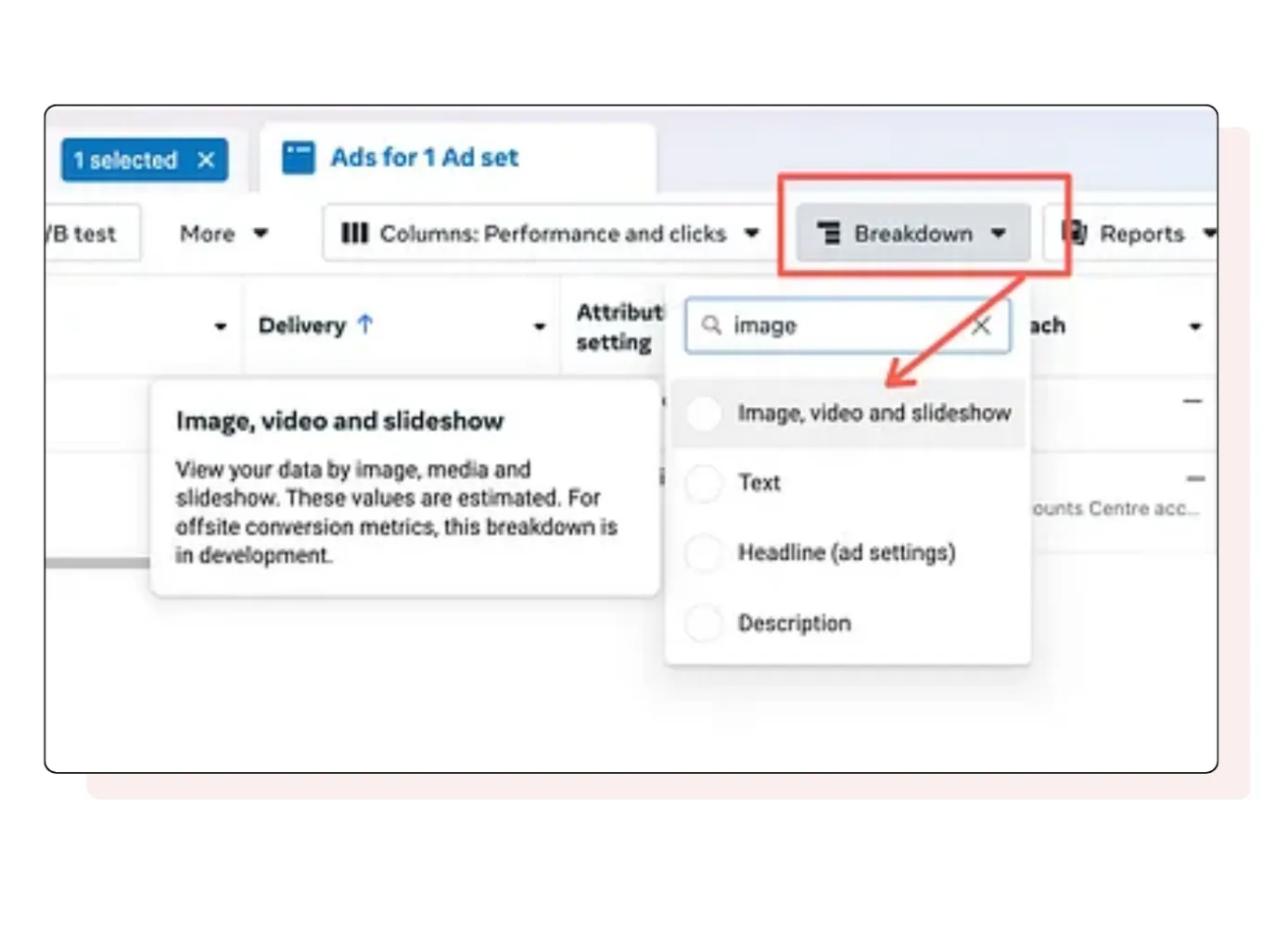
It’s up to you whether you use CBO or ABO. It makes sense to me to use ABO if targeting different audiences.
Pros:
- Better control over creative tests
- You can also test different messaging angles by testing the same creatives in one adset vs another, but with different copy
- More efficient adspend on your scaling campaign
Cons:
- Overlap on campaigns
- Overlap on targeting
- Complex
- Difficult to use for accounts with low spend (because 10% of a small budget doesn’t do anything)
The biggest con about this approach is that ads identified as winners may not scale. Once you move an ad turn it off and rebuild it somewhere else, everybody knows that the learning resets.
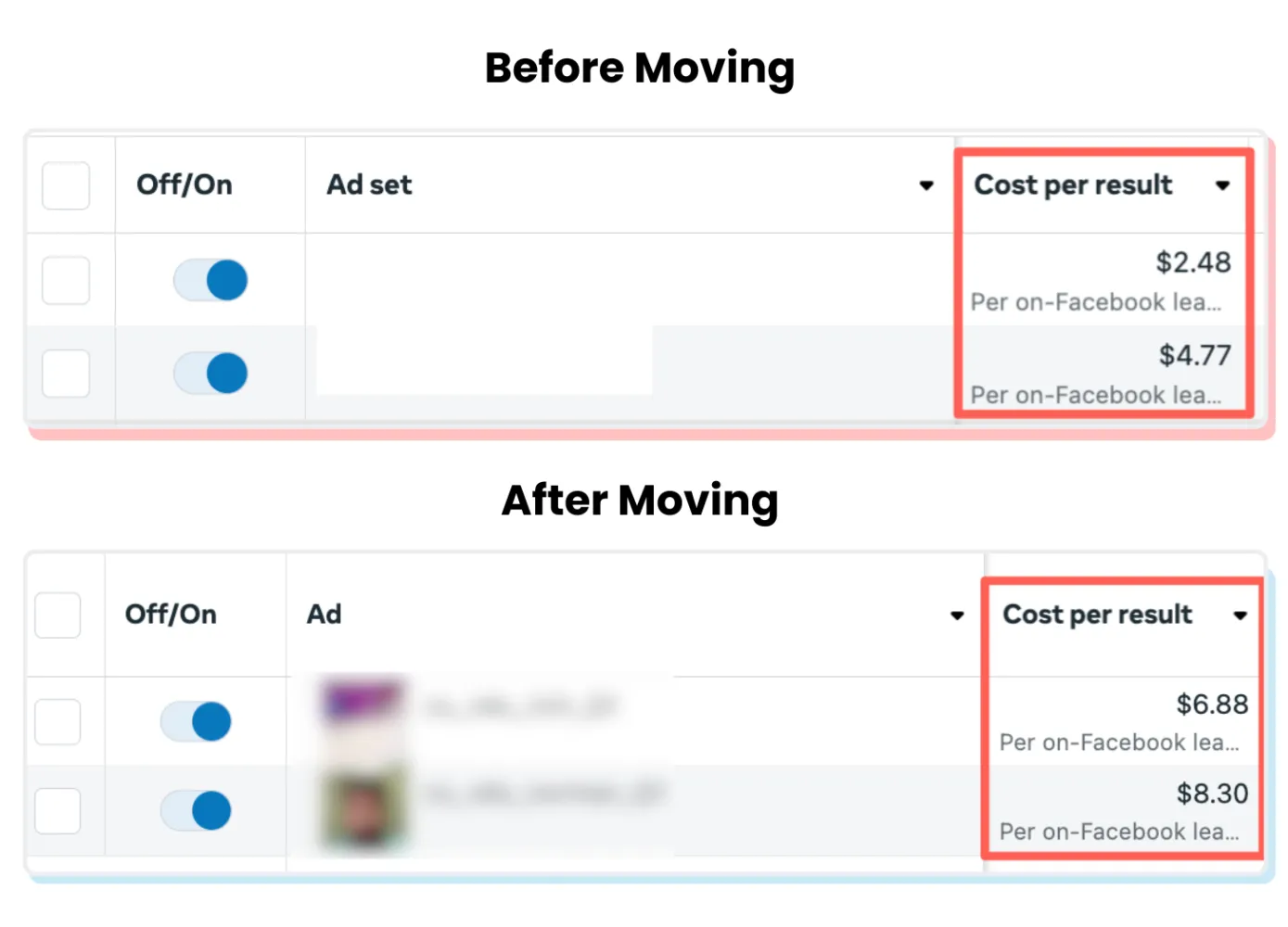
Not just me experiencing this, either:
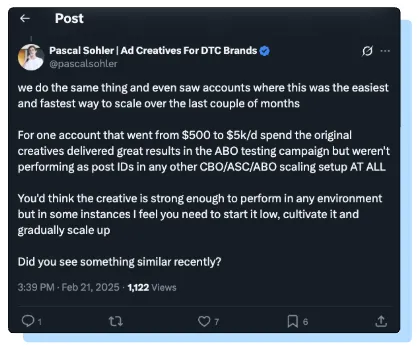
You might get lucky and your $5 cost per lead ad keeps performing that way. Or, once that same ad gets 10x the budget, it suddenly tanks because there wasn’t enough people interested in it anyway.
4. Is there an ultimate setup? Possibly.
🔔 UPDATE: Meta has fully rolled out the Andromeda update, so it’s unclear what the best practice is now. However, these are my notes:
This seems to support the comments made by folks on Reddit to simplify your account structure down to:
- 1 CBO campaign
- 1 broad adset
- 15-20+ ads
Where to from here?
👉🏼 With this process, I will scale the winning adsets ~20% every 3 or so days, and launch a new challenger adset each week to try beat the cost per lead performance of the winner.
–
But this is just my approach. If you’re running ads, let me know your setup structure and your logic for building campaigns that way. I’d love to know!
For a worked example of all of this on a local offer, see how I run ads for Pilates studios, and what I check first when local lead gen ads stall.