
How I run Facebook ads for schools (2026 playbook)
 Written by Benjamin Boman · · 7 min read
This is the playbook I used to help a school get $36k in enrolments from about $2k of ad spend, after Meta ads failed for them the first time. It covers:
- Why I moved away from optimising for cheap lead volume
- The 3-step funnel: landing page with a survey, booking page, confirmation page
- What the ads look like (nothing groundbreaking)
- Why connected calls matter more than cost per lead
- The three things to get right: SMS, response speed, and targeting different personas
If you run a school and want this done for you, here’s more on Facebook ads for schools. For trade schools and academies, see how I build the ad strategy.
Transcript
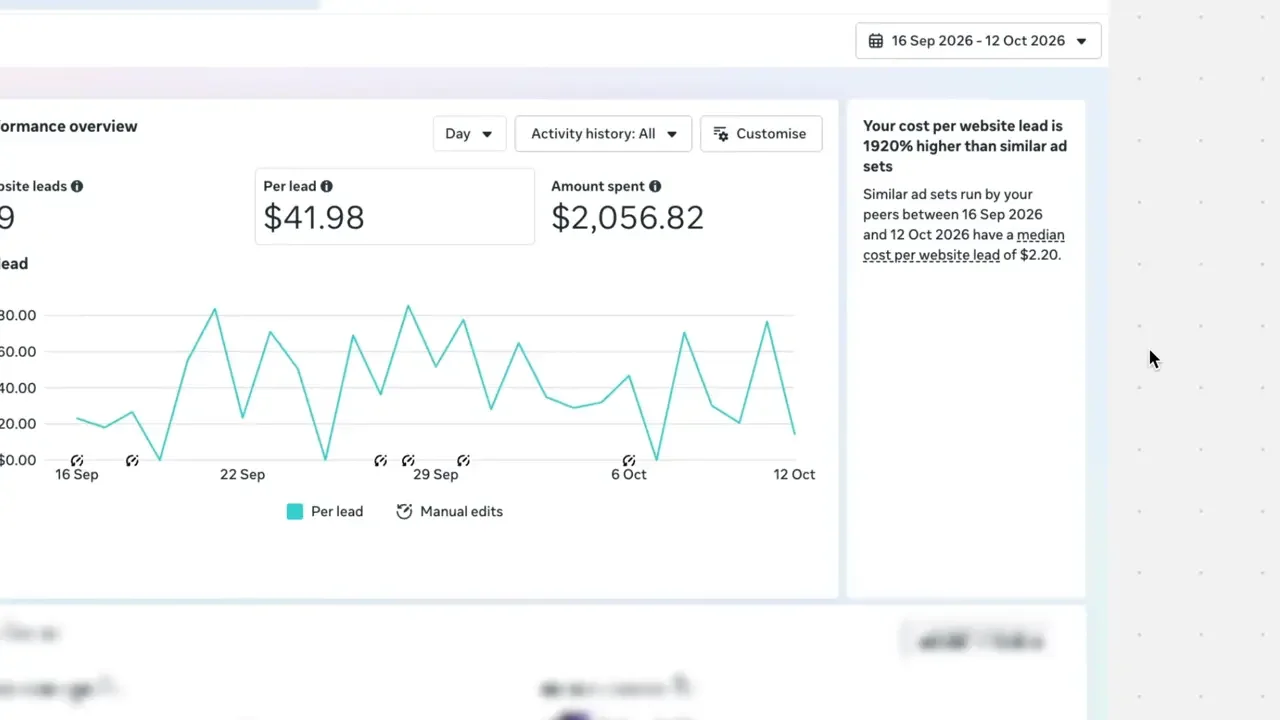
Here’s the playbook I used to help my client bag $36k in enrolments with just $2,000 spend, after failing at Meta ads the first time they tried it. And you can see here that the cost per lead is way higher than competitors. I’ll show you why that doesn’t actually matter.
Why I stopped optimising for volume
The first thing is, most people doing lead gen on Meta (and this was me a lot in the past) optimise for volume.
You can use lead forms for this kind of industry, and take it up a notch by using the last page of the lead form to send people to Calendly, so you get bookings as well.
In the past, you could also take it up another notch with Lead Center. It’s free, it comes with Meta, and it lists everyone who filled out the lead form in a CRM type view. You could move leads to qualified and converted to signal back to Meta who was good and bad, and who to get more or less of. Time wasters and spam leads you’d mark as not qualified. Anyone who attended calls or closed you’d mark as qualified and converted, and Meta would try to find more of those people.
I’ve heard of, and had, problems with this technique over the last 16 months, so I no longer use it. It’s been really up and down.
The 3-step funnel
These days I use a typical 3-step funnel:
- Run the ads to a landing page, with a survey on the page to pre-qualify people for a call back.
- When they finish the qualification form, push them to a booking page.
- After they book, push them to a confirmation page to reinforce the information.
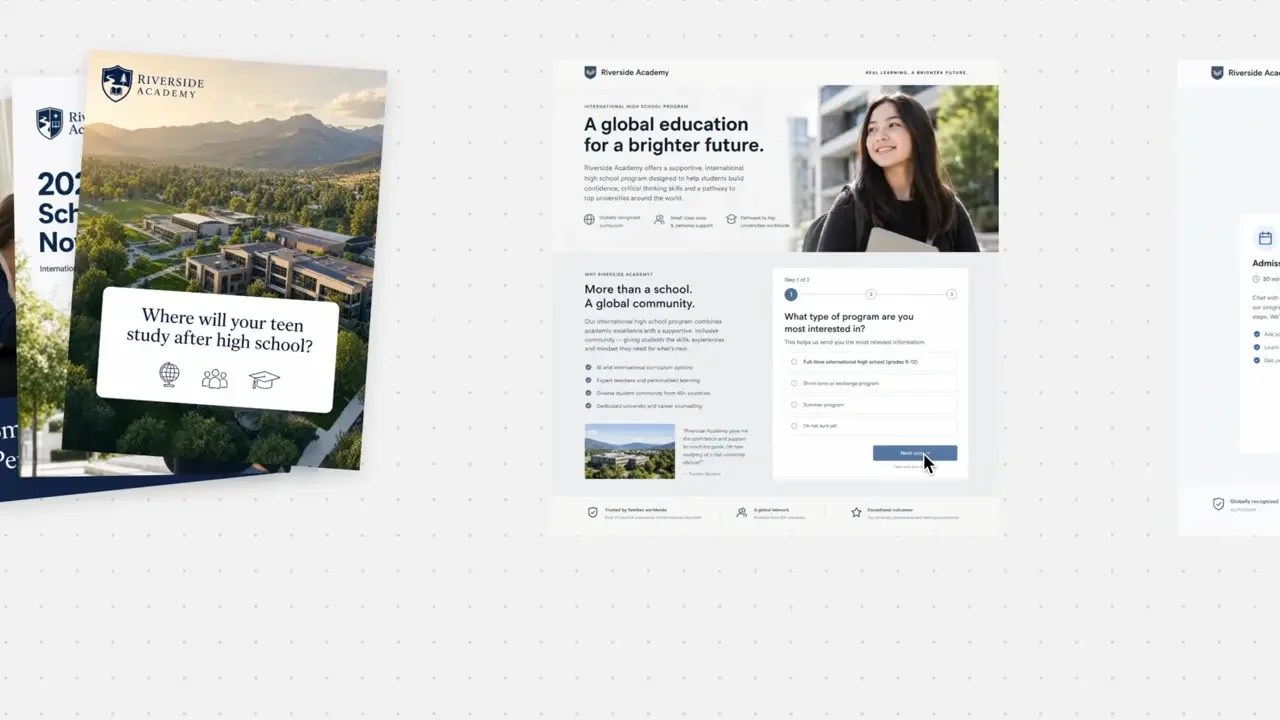
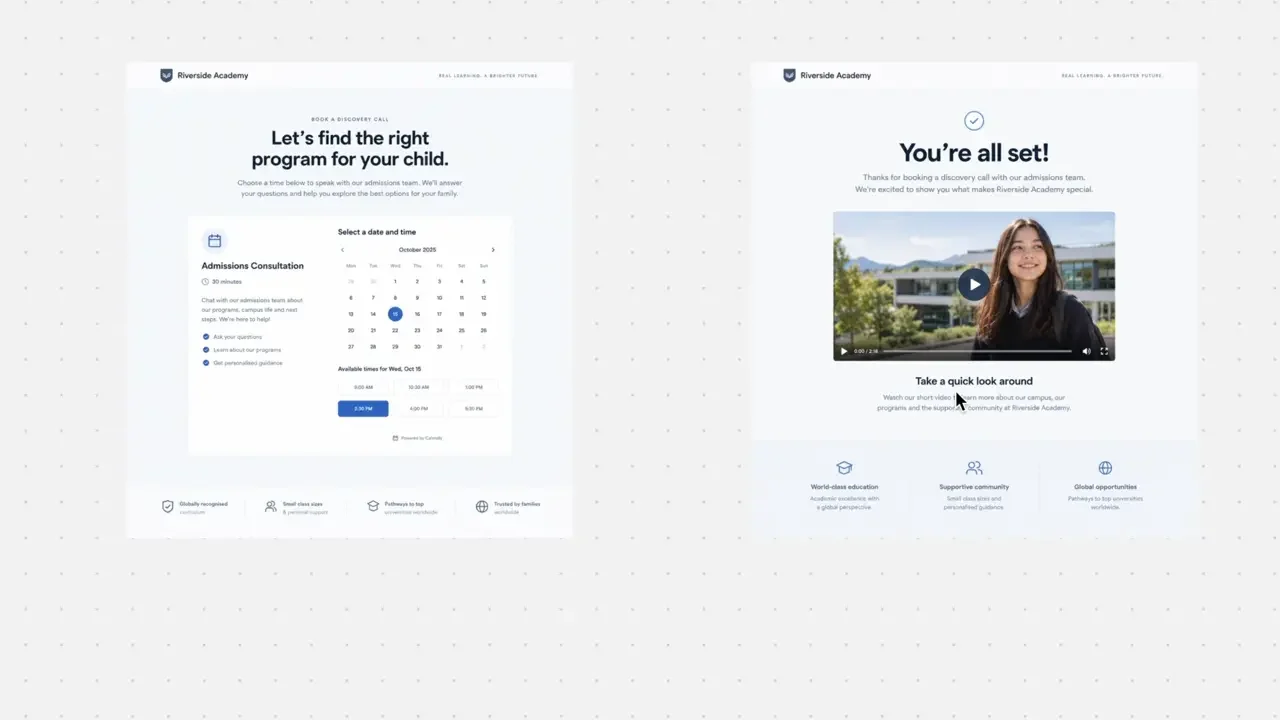
These aren’t real pages, by the way, just mock-ups.
The ads
For the ads themselves, I used Adspo to profile competitors in the space, and the longest-running ads pretty much all use the same types of format.
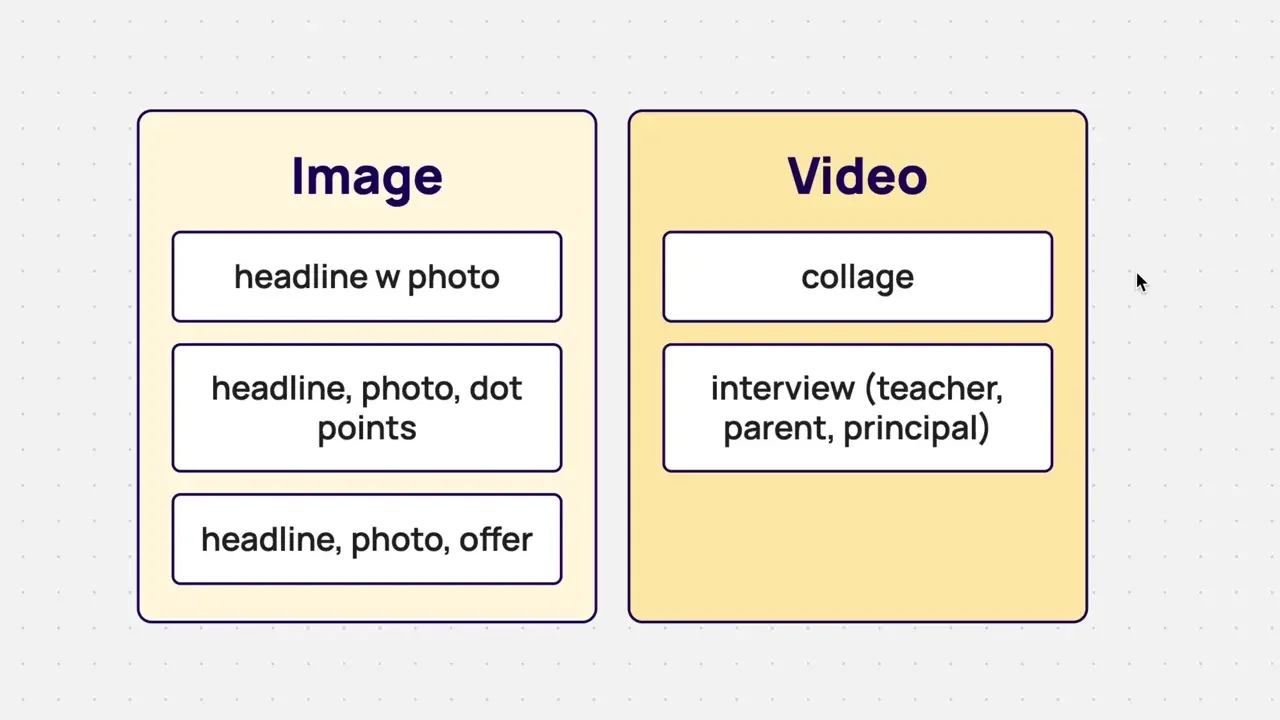
Images:
- A headline with a photo
- A headline, photo and dot points to display certain benefits
- A headline, photo and offer
Nothing groundbreaking there, compared to direct-to-consumer e-commerce, for example, which is way more varied.
Video:
- A collage, which is just a series of clips showing how cool the school is
- An interview of some kind, with a teacher, parent or principal
So there’s nothing groundbreaking on the creative.
Cost per lead vs connected calls
Using this funnel, Meta says the cost per lead is a lot more expensive than competitors. That’s a really general benchmark, by the way. I’m pretty sure Meta hasn’t properly profiled this ad account yet, because I don’t think competitors are getting leads for $2.20.
In any case, the client is pretty happy with the results. They’re closing 10 to 15% of the leads that come in, and I don’t think they care about the lead cost given that return.
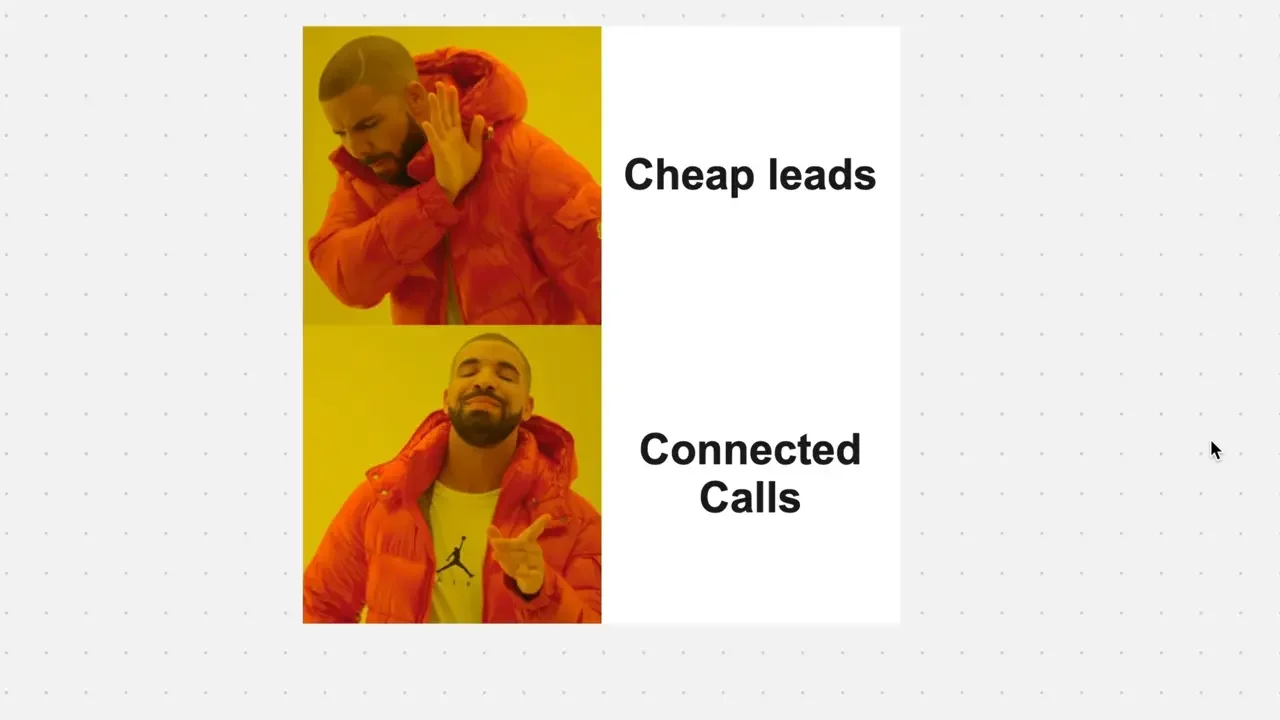
And that’s really the sticking point with Meta lead gen these days, in my opinion. We focus too much on cost per lead, and not enough on connected calls. This is what really matters at the end of the day:
- How many leads actually pick up the phone when you call them back
- How many of those people attend their meetings
- How many of those people close
We can’t affect the close rate that much, but it’s heavily linked to how many people pick up the phone and how many attend the meeting. Without those two, you risk burning out the sales team, which is a really terrible thing to do. You really want the sales team on side. (More on this in why the cheapest leads aren’t the goal.)
Three things to get right
If you’re going to do this, there are three really important things to get right. I think the third one isn’t talked about enough in lead gen.
1. SMS
It’s not just the page sequence that pushes up the show rate and connection rate, although that’s a big factor. The essential thing, in my opinion, is SMS.
These days, I find email basically does nothing for show rates and connection rates. Think about yourself: when you talk to friends, you tend to use messaging. If you send something for them to reference, you might email it, but you’re not getting or checking notifications on email.
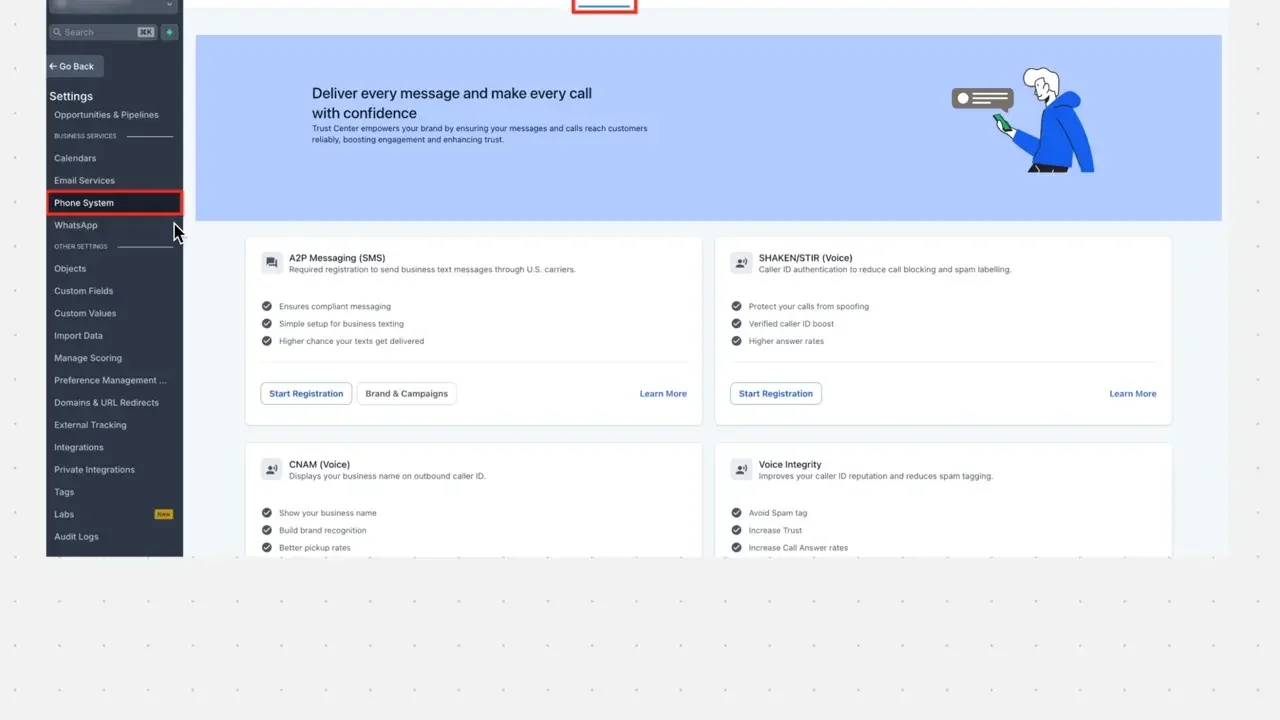
So if you don’t already have one, make sure you have a CRM set up to handle SMS for you. GoHighLevel, for example, has a system in its phone settings for registering A2P (application to person) messaging, which you have to do to send automations through the platform.
2. Response speed
The next thing is staying on top of your response rate.
BJ Fogg has a really good model for thinking about behaviour. Behaviour comes down to motivation (high or low) and how difficult the thing is to do (hard or easy). You can plot an action line, so:
- With high motivation, people are capable of doing things that are really taxing or difficult
- With low motivation, if you ask them to do something difficult, there’s pretty much no chance they’ll do it. Ask them to do something easy, and there’s a high chance they will
So when someone is booking a call or filling out a form, that’s the highest their motivation will be. You want to connect with them in that high motivation state if you want to sell or enrol them. A couple of days later, their motivation will be way lower, and your chances of getting anything difficult done with that prospect go down a lot.
This pans out in the data, too. A survey by Phonexa found the response rate is way higher the sooner you call, and the chance a lead turns into a qualified lead is way higher if you call in the first hour.
But sadly, the number of businesses that actually do this is low. In their data on how quickly companies call back their leads, a lot do call quickly, but maybe two thirds reply after more than 24 hours, or don’t reply at all.
Don’t be those people. If you want the ads to work, respond in the first 5 minutes, ideally, to make the most of when people’s motivation is highest. If you wait an hour, 2 hours, a day, you’re asking people to do something really difficult, like pick up the phone, when their motivation is low.
3. Personas
The final thing is Meta’s algorithm itself. There’s been a lot of talk over the last year and a half about Meta’s Andromeda model. Basically, Meta upgraded its AI to look for the best ad for each group of people.
Most people are pretty familiar now with the idea that you need to differentiate your messages: different formats, different messaging angles, that type of thing. What people seem less familiar with is targeting different personas.
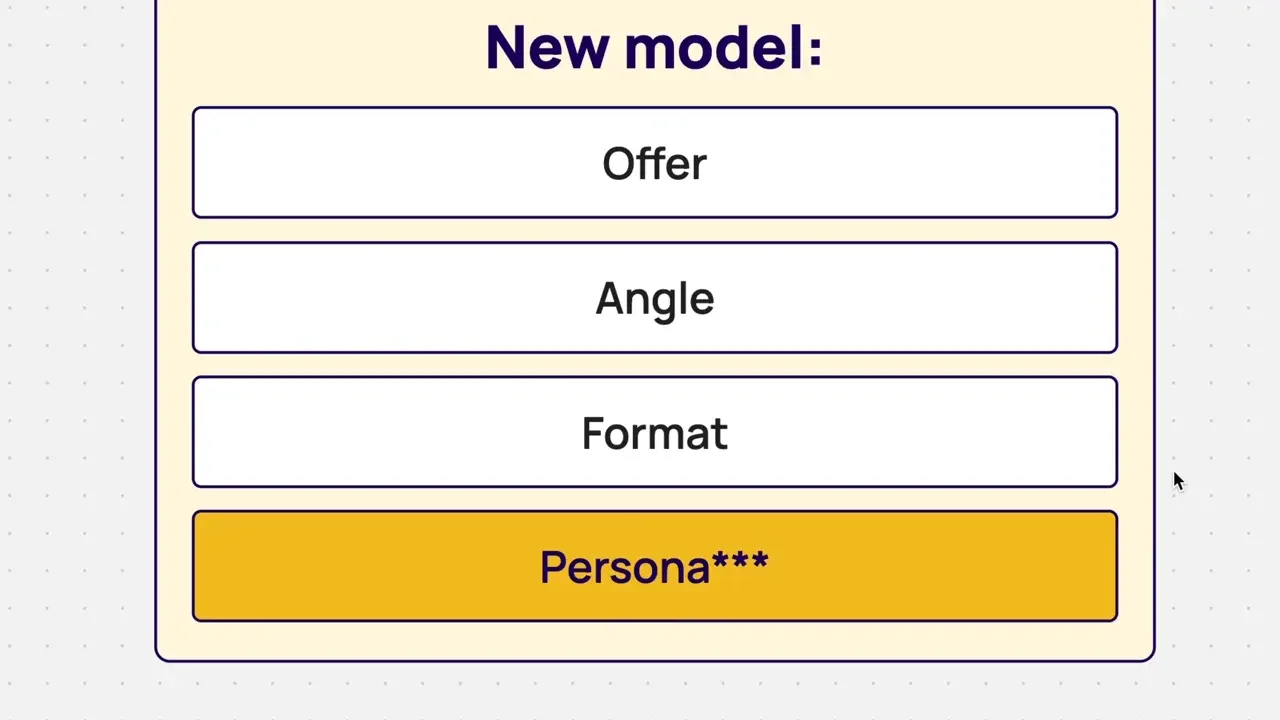
It’s pretty clear you can iterate your offer (thanks to Alex Hormozi), your angle and your ad format. But persona, in my opinion, is one of the biggest levers for improving connection rate (people picking up the phone) and close rate.
If you advertise the programme to a group that just isn’t interested, it almost doesn’t matter how much money or volume you put through the funnel. It’s not really going to do much for you.
For example, I’ve had two clients use the exact same funnel (the 3-step funnel above):
- One had 12% show rates
- One had 80% show rates
The ads were roughly the same. The big difference was a different programme for a different market. In the second one, people in that market just wanted the thing, and they were really interested in the programme. In the first one, we tried to do it with volume, and it doesn’t work.
So if your ads have a low pickup rate (people aren’t interested when you call them back), consider changing the persona. This goes back to classical marketing: the market is full of segments. There might be groups interested in sports, groups interested in homeschooling, or groups interested in extracurriculars.
Break up the market and try targeting your ads to those different groups:
- It’s good practice for Meta’s new model, which wants to find the best ad for each group
- It helps your connection and close rate overall
What you want to find in the end is the right group, the one that responds to the ads and closes.
So that’s the funnel and the playbook I suggest.